
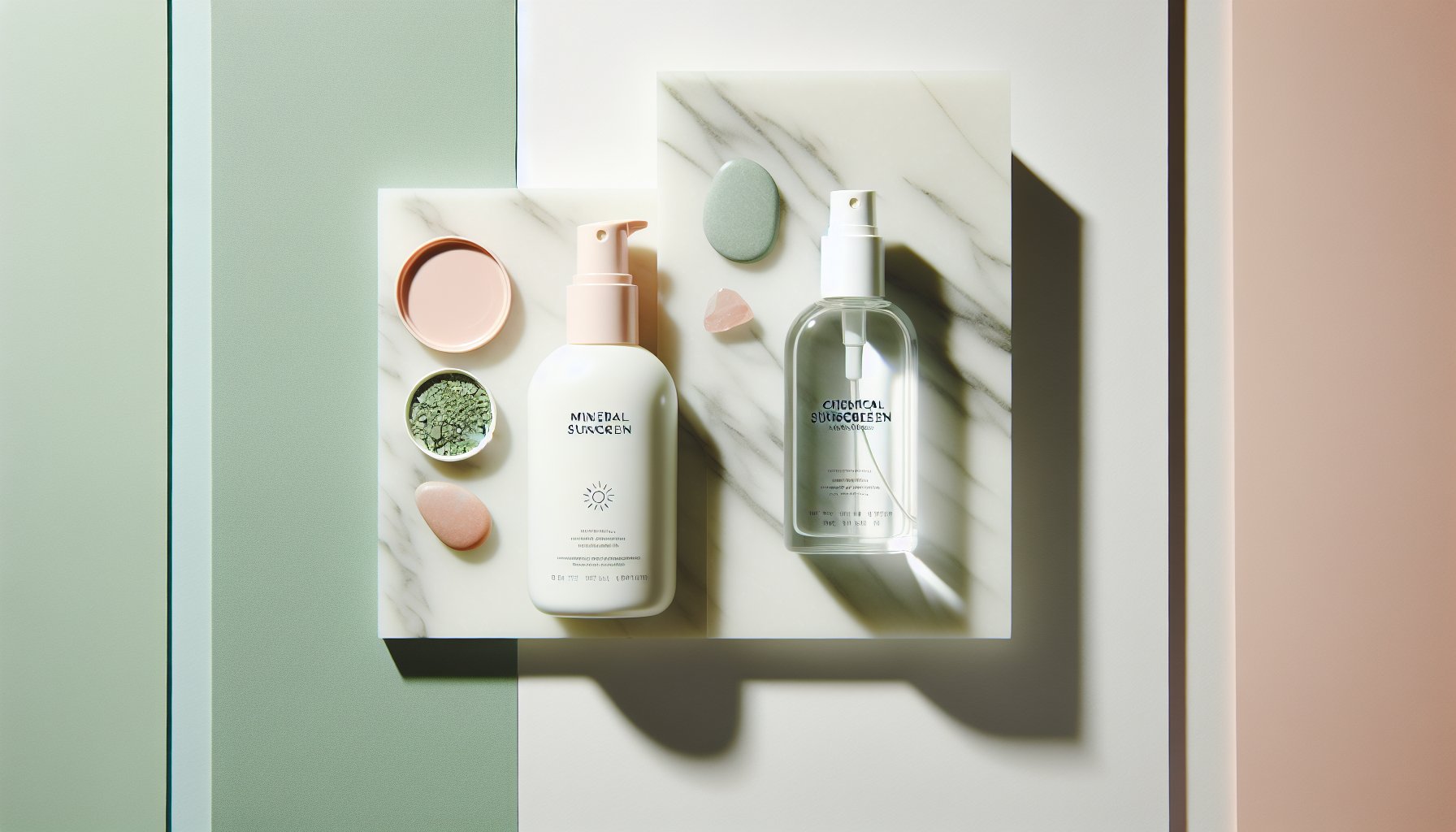
A 2019 FDA pilot study published in JAMA found that four common chemical sunscreen ingredients — avobenzone, oxybenzone, octocrylene, and ecamsule — were absorbed into the bloodstream at levels exceeding the FDA's safety threshold after just one day of maximal use. That finding reignited the debate between mineral and chemical sunscreens, though both types remain recommended by dermatologists for daily UV protection.
Quick Summary:
- Mineral sunscreens use zinc oxide and titanium dioxide to physically block UV rays, while chemical sunscreens use organic filters like avobenzone and homosalate to absorb and convert UV radiation into heat
- Zinc oxide and titanium dioxide are the only two sunscreen ingredients the FDA currently classifies as GRASE (Generally Recognized as Safe and Effective)
- Mineral formulas are preferred for sensitive, rosacea-prone, and eczema-prone skin because they cause less irritation
- Chemical sunscreens offer lighter textures and no white cast, making them easier to wear daily under makeup or on deeper skin tones
- Both types provide effective broad-spectrum protection when applied correctly — the best sunscreen is the one you will actually wear every day
What Makes a Sunscreen "Mineral" or "Chemical"?
The distinction comes down to the active UV-filtering ingredients. Mineral sunscreens (also called physical sunscreens) contain just two possible active ingredients: zinc oxide and titanium dioxide. These are inorganic minerals ground into fine particles.
Chemical sunscreens (sometimes called organic sunscreens in scientific literature) use a range of carbon-based compounds as their active filters. Common chemical UV filters include avobenzone, homosalate, octisalate, octocrylene, and oxybenzone. Many modern formulas combine several of these to achieve broad-spectrum coverage.
Some sunscreens blend both mineral and chemical filters — these are often labeled "hybrid" formulas. A product like CeraVe Hydrating Mineral Sunscreen SPF 30 (around $16) uses zinc oxide alongside moisturizing ceramides and niacinamide, sticking to the mineral side.
For a deeper look at SPF ratings and what the numbers actually mean, read our guide to understanding SPF.
How Each Type Protects Your Skin
Mineral Sunscreens: Reflecting and Scattering UV
Zinc oxide and titanium dioxide work primarily by sitting on top of the skin's surface and scattering UV photons before they penetrate. Recent research, including a 2016 study in Photochemical & Photobiological Sciences, shows that mineral filters also absorb some UV radiation — so the old "physical blocker" label is slightly oversimplified.
Zinc oxide provides true broad-spectrum protection on its own, covering both UVA and UVB wavelengths. Titanium dioxide is stronger against UVB and short-wave UVA but weaker against long-wave UVA. That's why many mineral sunscreens rely on zinc oxide as the primary active, sometimes adding titanium dioxide for extra UVB defense.
Mineral filters begin working immediately on application — no wait time needed.
Chemical Sunscreens: Absorbing and Converting UV
Chemical filters absorb UV radiation and transform it into small amounts of heat that dissipate from the skin. Each chemical filter covers a specific range of UV wavelengths. Avobenzone, for example, is one of the few chemical filters that provides strong UVA1 protection, which is why it appears in most U.S. chemical sunscreen formulas.
The challenge with chemical filters is photostability. Avobenzone degrades when exposed to sunlight unless stabilized by other ingredients like octocrylene or Mexoryl SX. Modern formulations have largely solved this problem, but it's one reason why reapplication every two hours matters. For complete guidance on application, check our sunscreen guide.
Chemical sunscreens typically need about 15 minutes after application to fully bind to the skin before sun exposure, though recent evidence suggests they start working before that window is up.

Pros and Cons: A Direct Comparison
Advantages of Mineral Sunscreens
- Gentle on reactive skin. Zinc oxide is anti-inflammatory, making mineral formulas the go-to for sensitive skin and conditions like rosacea.
- GRASE status. Zinc oxide and titanium dioxide are the only two active sunscreen ingredients the FDA designated as GRASE in its 2019 proposed rule update.
- Instant protection. No waiting period — they work the moment you apply them.
- Reef-friendlier. Hawaii and Key West have banned oxybenzone and octinoxate due to coral reef concerns. Mineral formulas sidestep those restrictions.
- Stable in sunlight. Mineral filters do not degrade as readily as chemical filters.
Disadvantages of Mineral Sunscreens
- White cast. This is the biggest complaint, especially on medium to deep skin tones. Micronized and nano-particle formulations reduce this effect but don't always eliminate it.
- Thicker texture. Mineral sunscreens tend to feel heavier and can be harder to blend.
- Pilling. They can ball up when layered over certain serums or moisturizers.
Advantages of Chemical Sunscreens
- Cosmetic elegance. Lighter, thinner, and easier to spread evenly. Supergoop Unseen Sunscreen SPF 40 (around $38) is a prime example — it goes on completely clear with a weightless gel texture.
- No white cast. Ideal for all skin tones, which makes them a better fit for people with darker skin tones.
- Easier to formulate at high SPF. Achieving SPF 50+ is simpler with chemical filters.
- Better under makeup. The thin consistency layers well under foundation.
Disadvantages of Chemical Sunscreens
- Potential for irritation. Oxybenzone and avobenzone can trigger contact dermatitis in some people. A 2020 study in Contact Dermatitis identified avobenzone as one of the more common sunscreen-related allergens.
- Systemic absorption. The 2019 and 2020 JAMA studies showed that chemical filters can be detected in the bloodstream. This does not mean they are harmful — the FDA specifically stated that absorption does not equal risk — but requested more safety data.
- Environmental concerns. Oxybenzone has been linked to coral bleaching in laboratory studies, leading to bans in certain marine ecosystems.
Verdict: If you have sensitive, reactive, or rosacea-prone skin, choose a mineral sunscreen with zinc oxide as the primary active. If you prioritize a lightweight feel with no white cast and your skin tolerates chemical filters well, a modern chemical formula is an excellent daily choice. Both types protect effectively when applied correctly and reapplied on schedule.
Who Should Choose Mineral Sunscreen?
Mineral sunscreens are the better pick for several specific groups:
- People with sensitive or easily irritated skin. Zinc oxide's anti-inflammatory properties make it soothing rather than irritating. EltaMD UV Clear Broad-Spectrum SPF 46 (around $39) combines zinc oxide with niacinamide, making it a dermatologist favorite for redness-prone and acne-prone skin.
- Those with rosacea or eczema. Dermatologists consistently recommend mineral formulas for these conditions because chemical filters can trigger flare-ups.
- Pregnant or nursing individuals. While no sunscreen ingredient has been proven harmful during pregnancy, many OB-GYNs recommend mineral sunscreens as a precautionary measure since zinc oxide and titanium dioxide have minimal absorption.
- Post-procedure skin. After chemical peels, laser treatments, or microneedling, mineral sunscreens are the standard recommendation because they are less likely to sting or irritate compromised skin.
- Children. The AAD recommends mineral sunscreens for babies over six months because of the lower irritation potential.
La Roche-Posay Anthelios Mineral Gentle Sunscreen SPF 50 (around $34) uses titanium dioxide in a lightweight, fragrance-free formula that works well for reactive skin without feeling heavy.
Who Should Choose Chemical Sunscreen?
Chemical formulas shine in certain situations:
- People who dislike the feel of mineral sunscreen. If white cast or thick texture stops you from wearing SPF daily, a chemical formula removes those barriers.
- Deeper skin tones. The white cast from mineral formulas can look ashy or gray on dark skin. Chemical sunscreens go on invisible.
- Active lifestyles. Chemical formulas tend to adhere to the skin better during sweating and physical activity.
- Those who layer SPF under makeup. The thin, fluid texture of chemical sunscreens acts as a smooth base for foundation.
Addressing the Safety Question
The 2019 and 2020 JAMA studies generated headlines, but context matters. The studies showed that chemical sunscreen ingredients could be detected in the bloodstream at levels above 0.5 ng/mL — the FDA's threshold for waiving additional safety testing. This triggered a request for more data. It did not trigger a recall, a warning, or a recommendation to stop using chemical sunscreens.
The American Academy of Dermatology's position remains clear: the known risks of unprotected UV exposure — skin cancer, premature aging, hyperpigmentation — far outweigh the theoretical risks of sunscreen absorption. Both the AAD and the Skin Cancer Foundation continue to recommend any broad-spectrum SPF 30+ sunscreen over no sunscreen at all.
Zinc oxide and titanium dioxide earned their GRASE classification because decades of data confirm that they are not absorbed in meaningful quantities and have an excellent safety profile. If the absorption question concerns you, mineral sunscreens offer a straightforward solution.
Recommended Mineral and Chemical Sunscreens
Best Mineral Sunscreen for Sensitive Skin
EltaMD UV Clear Broad-Spectrum SPF 46 (around $39) is oil-free, fragrance-free, and formulated with 9% zinc oxide plus niacinamide. It's the most recommended sunscreen among dermatologists for acne-prone and sensitive skin types.
Best Lightweight Mineral Option
Neutrogena Sheer Zinc Face Dry-Touch Sunscreen SPF 50 (around $12) uses 21.6% zinc oxide but manages to feel lighter than most mineral formulas. The dry-touch finish reduces the greasy feeling common in mineral products, and the price point makes it easy to apply generously.
Best Chemical Sunscreen for Daily Wear
Supergoop Unseen Sunscreen SPF 40 (around $38) goes on completely clear, leaves no white cast, and doubles as a makeup primer. The gel formula feels weightless and has become one of the most popular daily-use sunscreens for its wearability.
Best Mineral Sunscreen with Skincare Benefits
CeraVe Hydrating Mineral Sunscreen SPF 30 (around $16) pairs zinc oxide with three essential ceramides and niacinamide to support the skin barrier while protecting against UV. It's a strong budget-friendly choice for dry or normal skin.
Best Mineral for Broad-Spectrum Coverage
La Roche-Posay Anthelios Mineral Gentle Sunscreen SPF 50 (around $34) provides high SPF in a mineral formula that works across skin types, including those prone to irritation. Fragrance-free and allergy-tested.
Common Mistakes When Choosing Sunscreen Type
Assuming mineral is always "better." Mineral sunscreens have a great safety profile, but a chemical sunscreen applied daily beats a mineral sunscreen left in the cabinet because of its texture. Effectiveness depends on consistent use.
Applying too little mineral sunscreen. Mineral formulas are often thick, and people tend to spread them thinly to avoid white cast. This dramatically reduces the actual SPF you get. Apply the full recommended amount — about one-third of a teaspoon for the face and neck.
Thinking chemical sunscreens are "toxic." The JAMA studies showed absorption, not harm. No study has established that chemical sunscreen ingredients cause health problems at the levels found in real-world use.
Ignoring the ingredient list. Labels that say "mineral" sometimes include chemical UV filters too. Check the active ingredients panel: if you want pure mineral, the only active ingredients should be zinc oxide and/or titanium dioxide.
Skipping sunscreen altogether because of confusion. The best choice is whichever type you'll use consistently. Our sunscreen guide covers application tips to help you get the most out of any formula.
Frequently Asked Questions
Is mineral sunscreen safer than chemical sunscreen?
Mineral sunscreens have GRASE status from the FDA, meaning decades of data confirm their safety. Chemical filters have been shown to absorb into the bloodstream, but no study has linked this to health problems. Both types are recommended by the AAD and Skin Cancer Foundation for daily use.
Why does mineral sunscreen leave a white cast?
Zinc oxide and titanium dioxide are white minerals. When applied to the skin, they reflect visible light as well as UV light, creating that chalky appearance. Micronized and tinted formulations reduce white cast significantly, though they may not eliminate it on darker skin tones.
Can I mix mineral and chemical sunscreens?
Yes. Hybrid formulas containing both mineral and chemical filters are common and safe. You can also apply a chemical sunscreen under a mineral one, though layering two separate sunscreens does not double your SPF — you get the protection of whichever has the higher rating.
Do mineral sunscreens clog pores?
Zinc oxide is non-comedogenic and actually has anti-inflammatory properties. Mineral sunscreens are generally less likely to cause breakouts than heavy chemical formulas. If you experience pilling or clogged pores, the culprit is usually the base formula (oils, silicones) rather than the mineral filters themselves.
How often should I reapply mineral vs chemical sunscreen?
Both types should be reapplied every two hours during direct sun exposure. Chemical filters degrade faster in UV light, while mineral filters can be rubbed off or displaced by sweat and touch. The two-hour rule applies equally to both types.
Are nano-particle mineral sunscreens safe?
The current scientific consensus, supported by multiple studies including a 2012 review in the International Journal of Cosmetic Science, is that nano-sized zinc oxide and titanium dioxide do not penetrate past the outermost layers of intact skin. They remain on the surface where they provide UV protection without systemic absorption.
Which type is better for acne-prone skin?
Mineral sunscreens with zinc oxide are generally the better choice for acne-prone skin. Zinc has anti-inflammatory and mild antibacterial properties. Look for oil-free, non-comedogenic mineral formulas. Chemical filters like oxybenzone can irritate breakout-prone skin in some individuals.
Do chemical sunscreens cause coral reef damage?
Laboratory studies have shown that oxybenzone and octinoxate can contribute to coral bleaching at high concentrations. This led to bans in Hawaii and parts of Florida. Not all chemical filters carry this risk — newer filters like Tinosorb S and Tinosorb M show less environmental impact. Mineral sunscreens are considered reef-safe.
Can I use mineral sunscreen under makeup?
Yes, but texture matters. Some mineral sunscreens are thick and can interfere with makeup application. Look for micronized formulas labeled as "sheer" or "dry-touch." Applying a thin layer of primer between mineral sunscreen and foundation can prevent pilling.
Is tinted mineral sunscreen better than untinted?
Tinted mineral sunscreens offer a practical benefit beyond cosmetics. Iron oxides in the tint provide additional protection against visible light and blue light, which can worsen melasma and hyperpigmentation. A 2020 study in the Journal of Cosmetic Dermatology found that tinted sunscreens outperformed non-tinted versions in preventing visible light-induced pigmentation.
Should I switch sunscreen types by season?
You can. Some people prefer a lightweight chemical sunscreen for humid summer months and a hydrating mineral formula in dry winter conditions. What matters most is that you wear sunscreen year-round. UV radiation reaches your skin in every season, even when temperatures drop.
The Bottom Line
Both mineral and chemical sunscreens provide proven UV protection when applied correctly. Choose mineral if you have sensitive or reactive skin, and choose chemical if you want a lightweight, invisible finish. The only sunscreen that fails is the one you skip. Pick the formula that feels good on your skin and wear it every single day.
Sources:
- Matta MK, Zusterzeel R, Pilli NR, et al. "Effect of Sunscreen Application Under Maximal Use Conditions on Plasma Concentration of Sunscreen Active Ingredients." JAMA. 2019;321(21):2082-2091. https://doi.org/10.1001/jama.2019.5464
- Matta MK, Florian J, Zusterzeel R, et al. "Effect of Sunscreen Application on Plasma Concentration of Sunscreen Active Ingredients: A Randomized Clinical Trial." JAMA. 2020;323(3):256-267. https://doi.org/10.1001/jama.2019.20747
- U.S. Food & Drug Administration. "FDA Advances New Proposed Regulation to Make Sure Sunscreens are Safe and Effective." https://www.fda.gov/news-events/press-announcements/fda-advances-new-proposed-regulation-make-sure-sunscreens-are-safe-and-effective
- Cole C, Shyr T, Ou-Yang H. "Metal Oxide Sunscreens Protect by Absorption, Not by Reflection or Scattering." Photodermatology, Photoimmunology & Photomedicine. 2016;32(1):5-10. https://doi.org/10.1111/phpp.12214
- American Academy of Dermatology. "Sunscreen FAQs." https://www.aad.org/public/everyday-care/sun-protection/sunscreen-patients/sunscreen-faqs