
A study published in the Journal of the American Academy of Dermatology (2020) by Fatima et al. found that only 10.9% of Black Americans reported regular sunscreen use, compared to 29.4% of White Americans — a gap driven largely by the persistent myth that dark skin doesn't need sun protection and the practical problem that many sunscreens leave an unacceptable white cast on deeper skin tones. The consequences are real: data from the American Cancer Society shows that while melanoma is less common in people of color, the five-year survival rate is significantly lower — 71% for Black patients versus 94% for White patients — largely due to later detection and a false sense of security from melanin.
Quick Summary:
- Melanin provides an estimated SPF of only 1.5 to 4 — far below the SPF 30 minimum recommended by dermatologists for all skin tones
- Dark skin is still susceptible to UVA-driven photoaging, hyperpigmentation, and skin cancer; UV exposure worsens melasma and post-inflammatory dark spots
- Tinted mineral sunscreens and newer chemical formulas eliminate white cast while providing full broad-spectrum protection
- Iron oxide in tinted sunscreens blocks visible light (400-700 nm), which contributes to hyperpigmentation in darker skin tones — a benefit untinted sunscreens don't provide
- The best sunscreen for dark skin is one you'll actually wear daily: lightweight, invisible, and formulated without the chalky finish of older mineral products
Why Dark Skin Still Needs Sunscreen
The belief that melanin provides sufficient sun protection is one of the most harmful myths in skincare. While melanin does absorb and scatter some UV radiation, the protection it offers is minimal compared to what's needed.
Melanin's actual protection level. A study by Brenner and Hearing published in Photochemistry and Photobiology (2008) calculated that the natural photoprotection from melanin in darkly pigmented skin provides an estimated SPF of approximately 1.5 to 4 — depending on melanin density and distribution. Even at the high end, that's one-seventh the minimum SPF recommended by dermatologists. Melanin alone leaves significant UV exposure unchecked.
UVA damage doesn't discriminate. UVA radiation (320-400 nm) penetrates deep into the dermis regardless of melanin content. It breaks down collagen, triggers hyperpigmentation, and contributes to photoaging in all skin tones. UVA passes through clouds and window glass, making it a year-round concern. See our understanding SPF guide for the full breakdown of UVA versus UVB.
Skin cancer risks are real. While melanoma incidence is lower in people of color, it tends to occur in areas with less melanin — palms, soles, nail beds, and mucous membranes (acral melanoma). These locations are often overlooked during skin checks, leading to later-stage diagnosis. Bob Marley's death from acral melanoma on his toe is perhaps the most well-known example of how this oversight can be fatal.
UV worsens existing pigmentation concerns. Melasma, post-inflammatory hyperpigmentation from acne, and uneven skin tone are all triggered or worsened by UV exposure. If you're treating dark spots with vitamin C, niacinamide, or other brightening ingredients, sunscreen protects that investment by preventing new pigment from forming.
Choosing Sunscreen Without White Cast
The white cast problem is real and legitimate — it's the primary barrier to sunscreen adoption in darker skin tones. Here's what causes it and how to avoid it.
Why White Cast Happens
White cast comes from mineral UV filters — zinc oxide and titanium dioxide — that sit on top of the skin and physically scatter light. In their standard form, these particles are large enough to reflect visible light, creating a whitish or grayish film that's especially noticeable on medium to deep skin tones.
Chemical (Organic) Sunscreens
Chemical filters absorb UV radiation and convert it to heat. They don't reflect visible light, so they leave no white cast on any skin tone. Modern chemical sunscreens with filters like avobenzone, homosalate, and octisalate are completely invisible once absorbed.
Supergoop Unseen Sunscreen SPF 40 (around $38) is a fully transparent, oil-free chemical sunscreen with zero white cast. It works on every skin tone and doubles as a makeup primer.
Best for: Anyone who wants zero trace of sunscreen visible on their skin.
Tinted Mineral Sunscreens
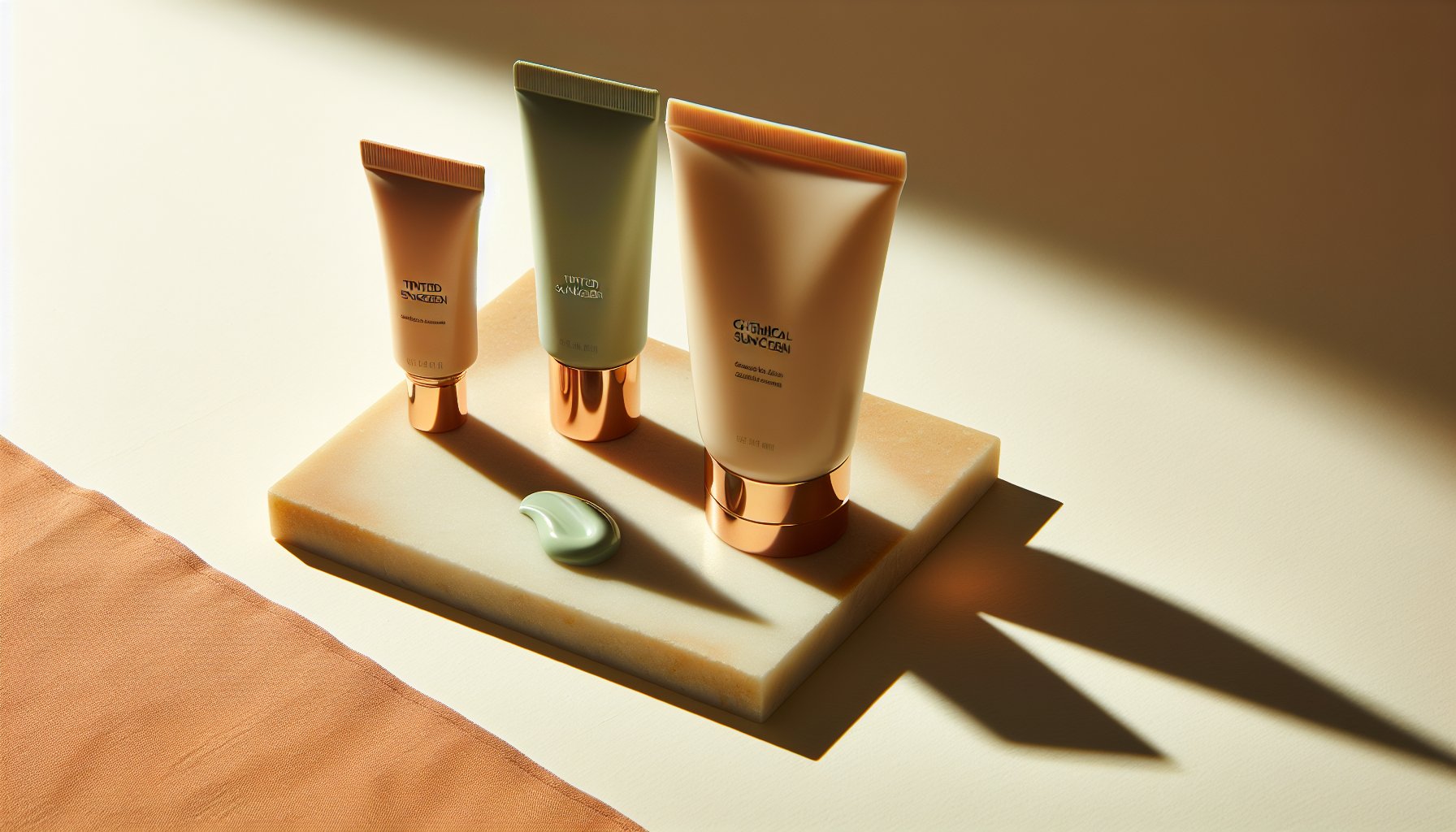
Tinted formulas use iron oxide pigments to counteract the white cast of mineral filters while adding a benefit that clear sunscreens can't match: protection against visible light.
A study by Krutmann et al. published in Photodermatology, Photoimmunology & Photomedicine (2023) confirmed that visible light (400-700 nm) contributes to hyperpigmentation, particularly in individuals with Fitzpatrick skin types IV-VI. Iron oxide pigments in tinted sunscreens block visible light wavelengths that standard UV filters miss — making tinted sunscreen a better choice than clear sunscreen for preventing dark spots in deeper skin tones.
La Roche-Posay Anthelios Mineral Tinted Sunscreen SPF 50 (around $34) offers broad-spectrum mineral protection with a universal tint designed to blend across a range of skin tones without ashy residue.
Best for: Hyperpigmentation-prone skin, melasma, and anyone who wants the gentleness of mineral filters without the white cast.
Micronized and Nano Mineral Sunscreens
Modern mineral sunscreens use micronized or nano-sized zinc oxide particles that are too small to reflect visible light, dramatically reducing or eliminating white cast. These are a middle ground between traditional mineral and chemical formulas.
EltaMD UV Clear SPF 46 (around $39) combines micronized zinc oxide with chemical filters in a lightweight, non-greasy formula that leaves minimal to no visible residue on medium skin tones. It also contains niacinamide for additional hyperpigmentation control.
Best for: Sensitive skin that needs mineral protection without heavy white cast.
Verdict: Dark skin needs sunscreen just as much as lighter skin — melanin provides SPF 1.5-4 at best, which is nowhere near adequate protection. The best approach for deeper skin tones is a tinted mineral sunscreen (for visible light protection and no white cast) or a transparent chemical sunscreen. Tinted formulas with iron oxide provide the strongest defense against hyperpigmentation because they block both UV and visible light wavelengths that trigger melanin production.

How to Apply Sunscreen on Dark Skin
The application rules are the same for all skin tones — see our how to apply sunscreen guide for the full technique. Key points:
Use the full amount. Two finger-lengths for the face and neck. Under-application reduces SPF dramatically — an SPF 50 applied at half thickness delivers roughly SPF 25.
Don't skip the neck and ears. Hyperpigmentation on the neck and décolletage is common and difficult to treat once established. Include these areas in every application.
Reapply every two hours during sun exposure. This applies regardless of skin tone. Set a timer if needed.
Layer under makeup. Apply sunscreen as the last skincare step, wait two to three minutes for it to set, then apply makeup. Tinted sunscreen can replace or reduce the need for foundation.
Neutrogena Hydro Boost Water Gel Sunscreen SPF 50 (around $16) provides a lightweight, affordable option that layers well under makeup without pilling.
Addressing Specific Concerns
Hyperpigmentation and Melasma
Sunscreen is the single most important product for preventing and managing hyperpigmentation. A study by Tsai and Chien in Photodermatology, Photoimmunology & Photomedicine (2022) confirmed that daily broad-spectrum sunscreen use significantly reduces the recurrence of melasma and the development of new dark spots. Without sunscreen, treatments like vitamin C serums and chemical peels are undermined by ongoing UV-triggered melanin production.
For melasma specifically, tinted sunscreens with iron oxide outperform clear sunscreens because visible light is a known trigger for melanocyte stimulation in darker skin tones.
Acne-Prone Dark Skin
Post-inflammatory hyperpigmentation (PIH) from acne is often more distressing than the acne itself for people with darker skin. Every breakout that heals can leave a dark mark lasting months. Sunscreen prevents UV from darkening these marks further.
Choose oil-free, non-comedogenic formulas. See our sunscreen for oily skin guide for formula recommendations that won't trigger breakouts.
Common Mistakes to Avoid
Relying on melanin as natural sunscreen. SPF 1.5-4 is not protection — it's barely noticeable compared to the SPF 30 minimum standard. Treat sunscreen as a daily non-negotiable regardless of your skin tone.
Avoiding sunscreen because of white cast. The solution is a better formula (tinted mineral, transparent chemical, or micronized mineral), not skipping sun protection entirely. The cosmetic problem of white cast has been solved by modern formulations.
Skipping sunscreen on cloudy days. Up to 80% of UV radiation penetrates clouds. UVA levels remain relatively constant year-round. Daily application is essential.
Using body sunscreen on the face. Body sunscreens are often thicker, heavier, and more likely to leave visible residue on darker skin. Use a facial-specific formula for better cosmetic results and lower comedogenic risk.
Ignoring sunscreen on dark spots you're treating. If you're using brightening ingredients on hyperpigmentation, unprotected sun exposure generates new melanin faster than those ingredients can clear it. Sunscreen makes every other treatment more effective.
Frequently Asked Questions
Does dark skin really need sunscreen every day?
Yes. Melanin provides minimal protection (SPF 1.5-4), which is far below recommended levels. UVA radiation that causes photoaging, hyperpigmentation, and contributes to skin cancer risk penetrates all skin tones. Daily broad-spectrum sunscreen is recommended by dermatologists for every skin tone.
What SPF should dark skin use?
SPF 30-50 broad-spectrum, the same recommendation for all skin tones. The SPF number needed doesn't change based on melanin content. See our understanding SPF guide for why SPF 30-50 is the practical range.
Which sunscreen ingredients cause white cast?
Zinc oxide and titanium dioxide (mineral filters) in their standard particle sizes reflect visible light, creating white cast. Chemical filters (avobenzone, homosalate, octisalate) do not cause white cast. Micronized or nano-sized mineral filters and tinted formulas significantly reduce or eliminate the problem.
Are tinted sunscreens better for dark skin?
Yes, for two reasons. First, the tint eliminates white cast. Second, iron oxide pigments in tinted sunscreens block visible light — which triggers hyperpigmentation in darker skin tones — providing protection that clear sunscreens (whether mineral or chemical) don't offer.
Can sunscreen help with dark spots?
Sunscreen prevents existing dark spots from getting darker and prevents new ones from forming. UV and visible light stimulate melanocytes to produce more pigment. Consistent sunscreen use is the foundation of any hyperpigmentation treatment plan.
Is chemical or mineral sunscreen better for dark skin?
Chemical sunscreens are invisible on all skin tones and are the simplest way to avoid white cast. However, tinted mineral sunscreens provide the added benefit of visible light protection. For hyperpigmentation-prone skin, a tinted mineral formula is the strongest choice. For ease and invisibility, chemical sunscreens are excellent.
Do Black people get skin cancer?
Yes. While melanoma is less common in Black patients, it occurs at higher rates on the palms, soles, and nail beds (acral melanoma). Late detection leads to a significantly lower five-year survival rate. All skin tones benefit from regular sunscreen use and annual skin checks.
How do I find a tinted sunscreen that matches my skin tone?
Many tinted sunscreens use "universal" tints designed to blend across a range of skin tones. For deeper skin tones, look for brands that offer multiple tint shades or choose formulas with sheer, adaptable tints. Test on the jawline in natural light before purchasing.
Does sunscreen prevent aging in dark skin?
Yes. While deeper skin tones show signs of aging later than lighter skin on average, UVA-driven photoaging (collagen breakdown, loss of elasticity, texture changes) still occurs. A study by Brady et al. in Skin Pharmacology and Physiology (2021) documented that photoaging in darker skin tones manifests as uneven tone, textural changes, and fine lines — all preventable with consistent sun protection.
Can I use the same sunscreen year-round?
Yes. UV radiation is present year-round, though intensity varies by season. UVA (the primary concern for hyperpigmentation and photoaging) remains relatively constant through all seasons and penetrates cloud cover. Use your sunscreen daily regardless of weather.
Should I wear sunscreen indoors?
If you sit near windows for extended periods, yes — UVA penetrates standard window glass. For people actively treating hyperpigmentation or melasma, indoor sunscreen near windows is recommended. If you have minimal window exposure, it's less critical.
The Bottom Line
Dark skin needs sunscreen — melanin provides SPF 1.5-4, which is not meaningful protection against UVA damage, hyperpigmentation, or skin cancer risk. Choose a tinted mineral sunscreen for the best combination of UV protection, visible light blocking, and no white cast, or a transparent chemical sunscreen for complete invisibility. Apply the full recommended amount daily, and treat sunscreen as the foundation of any hyperpigmentation treatment plan.
Sources:
- Brenner M, Hearing VJ. "The protective role of melanin against UV damage in human skin." Photochemistry and Photobiology. 2008;84(3):539-549. https://pubmed.ncbi.nlm.nih.gov/18435612/
- Tsai TF, Chien AL. "Photoprotection for skin of color." Photodermatology, Photoimmunology & Photomedicine. 2022;38(5):474-480. https://pubmed.ncbi.nlm.nih.gov/35044638/
- Brady J, et al. "Photoaging in diverse skin types." Skin Pharmacology and Physiology. 2021;34(3):150-160. https://pubmed.ncbi.nlm.nih.gov/34079319/
- Fatima S, et al. "Racial disparities in sunscreen use and skin cancer outcomes." Journal of the American Academy of Dermatology. 2020;83(5):1511-1513. https://pubmed.ncbi.nlm.nih.gov/32029932/
- Krutmann J, et al. "The role of visible light in photoaging and photoprotection." Photodermatology, Photoimmunology & Photomedicine. 2023;39(3):215-221. https://pubmed.ncbi.nlm.nih.gov/36763874/