
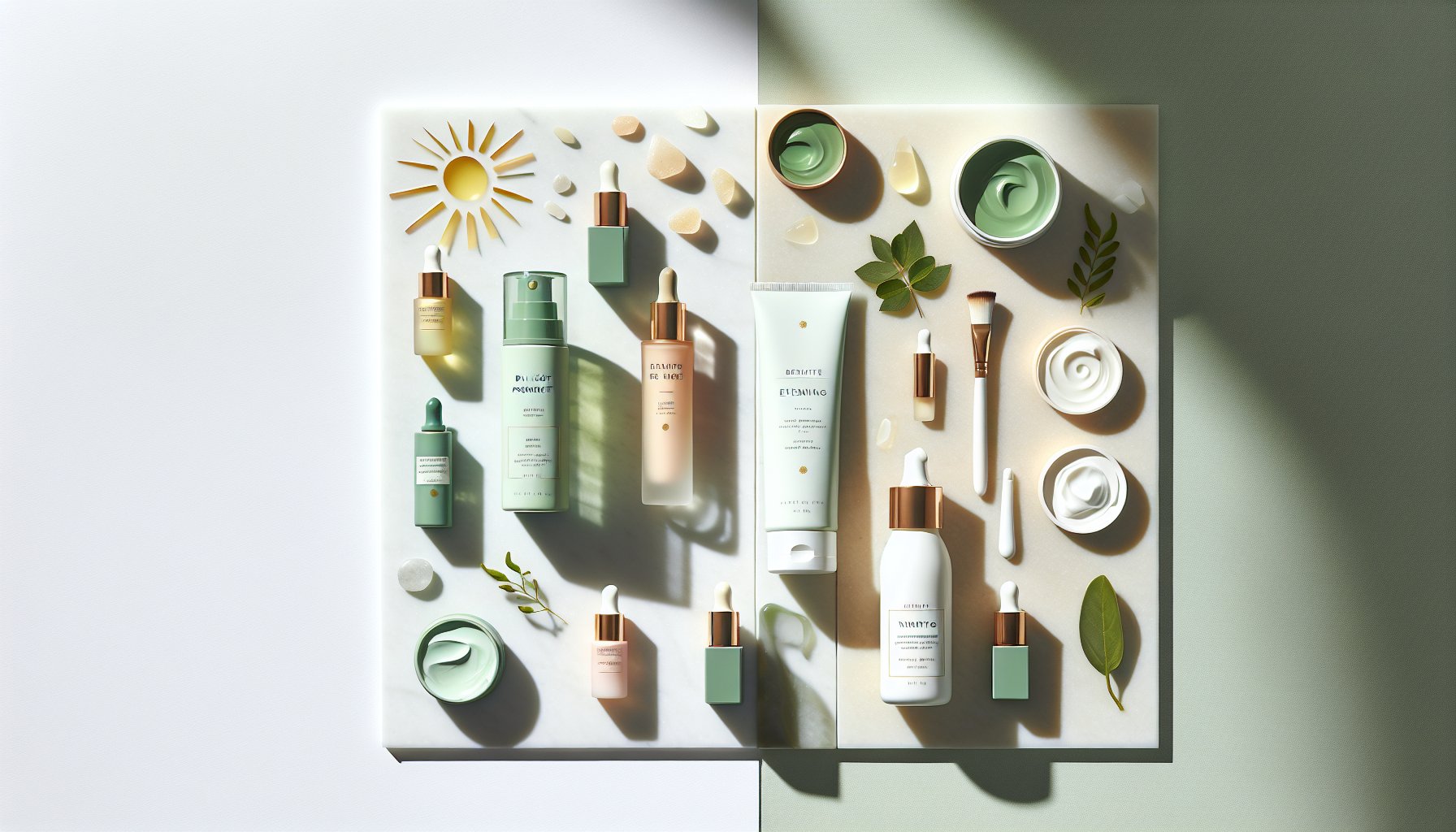
Research published in Cell Reports in 2020 found that stem cells in the skin follow a strict circadian clock, switching between protective functions during the day and regenerative repair at night. This built-in biological rhythm means your skin has fundamentally different needs at 8 AM than it does at 10 PM. Matching your products to that rhythm is how you get the most out of every step.
Quick Summary:
- Morning routines focus on protection with antioxidants and sunscreen; nighttime routines focus on repair with active treatments
- Retinol, chemical exfoliants, and other cell-turnover ingredients belong at night when they won't be degraded by UV exposure
- Vitamin C is most effective in the morning because it boosts sunscreen's photoprotective ability
- Skin cell regeneration peaks between 11 PM and 4 AM, making nighttime the best window for reparative ingredients
- A stripped-down morning routine of three to four products and a treatment-focused evening routine of three to five products covers everything your skin needs
Your Skin Runs on a 24-Hour Clock
Your skin doesn't do the same job around the clock. During the day, the skin barrier prioritizes defense — shielding against UV radiation, pollution, temperature changes, and oxidative stress. At night, the body shifts into recovery mode. Blood flow to the skin increases, cell division accelerates, and transepidermal water loss (TEWL) rises as the barrier becomes more permeable.
A 2019 study in the International Journal of Molecular Sciences documented these rhythmic changes, showing that skin permeability peaks in the late evening and overnight hours. This increased permeability is exactly why nighttime is the right window for active ingredients that need to penetrate deeper layers — and why those same ingredients can cause more irritation if you apply them on already-stressed daytime skin.
Understanding this cycle explains why a single, one-size-fits-all routine applied twice a day leaves results on the table. For a complete overview of how to structure any routine, start with our guide to building a skincare routine.
The Morning Routine: Defense and Protection
Your morning routine has one primary goal: prepare your skin to withstand the day. That means antioxidants to neutralize free radicals, hydration to keep the barrier intact, and sunscreen to block UV damage.
Step 1: Gentle Cleanser
A quick, gentle cleanse removes overnight oil and any residue from nighttime products. You don't need a deep clean in the morning — a mild formula or even a water rinse works for dry skin types. CeraVe Hydrating Facial Cleanser (around $16) contains ceramides and hyaluronic acid, so it cleans without disrupting the barrier you're about to protect.
Step 2: Antioxidant Serum (Vitamin C)
This is the step that separates a good morning routine from a great one. Vitamin C (L-ascorbic acid) neutralizes free radicals generated by UV exposure and pollution. A 2005 study published in the Journal of Investigative Dermatology by Lin et al. found that combining topical vitamin C and E with ferulic acid doubled the skin's photoprotection beyond sunscreen alone.
Paula's Choice C15 Super Booster (around $52) delivers 15% vitamin C with vitamin E and ferulic acid — the same trio studied in that research. Apply it to clean skin before moisturizer so it absorbs directly. For a full breakdown of forms, concentrations, and how to avoid oxidation, read our vitamin C guide.
Step 3: Moisturizer
A lightweight moisturizer locks in your serum and strengthens the skin barrier for the day ahead. Keep it light — heavy formulas can interfere with sunscreen application and feel uncomfortable under makeup. Gel-cream formulas work well for oily and combination skin, while lotion-weight formulas suit normal and dry types.
Step 4: Sunscreen (Non-Negotiable)
Sunscreen is the single most important product in your morning routine. A 2013 randomized controlled trial published in the Annals of Internal Medicine demonstrated that daily sunscreen application slowed visible skin aging by 24% over 4.5 years compared to occasional use. No serum or treatment delivers that level of prevention.
Apply a nickel-sized amount (about 1/4 teaspoon for the face) as the final skincare step. La Roche-Posay Anthelios Sunscreen (around $36) offers broad-spectrum SPF protection with a lightweight feel that layers well. For help choosing the right formula for your skin, check our sunscreen guide.
Verdict: Your morning routine should be streamlined and protection-oriented — cleanser, vitamin C, moisturizer, and sunscreen. These four steps shield your skin from the cumulative UV and environmental damage that drives premature aging, dark spots, and texture issues.
The Nighttime Routine: Repair and Treatment
Once the sun goes down, your priorities flip. Nighttime is when your skin is most receptive to active ingredients, and when cell turnover peaks. This is the routine where you address specific concerns — acne, fine lines, uneven tone, or texture.
Step 1: Thorough Cleanse
Evening cleansing needs to be more thorough than your morning wash. You're removing a full day of sunscreen, oil, pollution, and environmental debris. If you wore sunscreen or makeup, consider the double cleansing method — an oil-based cleanser first to dissolve the film-forming products, followed by a water-based cleanser to clear remaining residue.
Step 2: Active Treatment
This step is the biggest difference between your AM and PM routines. Nighttime is when you apply your strongest active ingredients. The two most common categories:
Retinol (retinoids): The most studied anti-aging ingredient in dermatology. Retinol speeds up cell turnover, boosts collagen production, fades dark spots, and clears acne. A meta-analysis published in the Journal of Cosmetic Dermatology in 2020 confirmed that retinoids significantly improve photoaging signs including fine wrinkles, roughness, and hyperpigmentation.
Retinol goes at night for two reasons: UV light breaks down retinol, reducing its effectiveness, and retinol increases photosensitivity, making daytime use risky without meticulous sunscreen reapplication. The Ordinary Retinol 0.5% in Squalane (around $8) is a solid starting point — the squalane base provides moisture while buffering some of the initial irritation. Start two to three nights a week and increase gradually. Our retinol guide covers the full adjustment timeline.
Chemical exfoliants (AHA/BHA): Glycolic acid, lactic acid, and salicylic acid dissolve dead skin cells to reveal smoother, brighter skin underneath. These are pH-dependent ingredients that work best on clean skin, and like retinol, they increase sun sensitivity. Use them on alternate nights from retinol, not on the same evening.
Step 3: Moisturizer
Your nighttime moisturizer can be richer than your daytime formula since you don't need to worry about it sitting under sunscreen or feeling heavy. CeraVe PM Facial Moisturizing Lotion (around $16) contains ceramides and 4% niacinamide, which supports barrier repair and reduces redness while you sleep. If your skin runs very dry, consider layering a thin face oil on top as a final occlusive seal.
Why Certain Ingredients Belong at Specific Times
Not all skincare ingredients care about timing, but several key actives perform dramatically differently depending on when you apply them.
Morning-Only Ingredients
- Vitamin C (L-ascorbic acid): Works synergistically with sunscreen to enhance UV protection. Research shows the antioxidant effect is most valuable during peak UV exposure hours.
- Sunscreen: Obvious, but worth stating — SPF is a daytime-only product. Applying it at night wastes product and provides zero benefit.
Night-Only Ingredients
- Retinol and retinoids: UV exposure degrades retinol and increases photosensitivity. Nighttime application protects the ingredient's stability and your skin.
- AHAs (glycolic acid, lactic acid): These exfoliating acids increase sun sensitivity. Nighttime use followed by morning sunscreen is the safe approach.
Anytime Ingredients
- Hyaluronic acid: A hydration booster with no photosensitivity concerns. Use it whenever your skin needs moisture.
- Niacinamide: Stable, non-irritating, and compatible with most actives. It works equally well in AM and PM routines.
- Ceramides: Barrier-supporting lipids that help at any time of day.
For the exact order to layer these products in each routine, see our skincare product order guide.
Common Mistakes With Morning and Night Routines
Using retinol in the morning. This is the most frequent timing error. Even with diligent sunscreen application, UV exposure breaks down retinol and increases your risk of irritation and sun damage. Always apply retinol at night.
Skipping morning cleanser entirely. While a water-only rinse can work for very dry skin, most people benefit from a gentle cleanser in the morning. Overnight, your skin produces oil and sheds dead cells, and leftover nighttime products create a film that blocks morning treatments from absorbing.
Applying the same heavy moisturizer day and night. Your morning moisturizer needs to be lightweight enough to layer under sunscreen without pilling. Save richer formulas for nighttime when comfort and repair are the priorities.
Overloading your nighttime routine with actives. Using retinol, an AHA, and a vitamin C serum all in the same evening is a recipe for irritation. Rotate your actives across different nights. A simple schedule: retinol two to three nights per week, chemical exfoliant one to two nights, and a rest night with moisturizer only.
Forgetting sunscreen after nighttime actives. If you used retinol or an AHA the night before, your skin is more photosensitive the next morning. This makes morning sunscreen even more critical — not optional.
Frequently Asked Questions
Can I use vitamin C at night instead of the morning?
Vitamin C won't harm your skin at night, but you lose its biggest daytime advantage — boosting sunscreen's photoprotection against UV-generated free radicals. If you can only use vitamin C once a day, the morning gives you more bang for your investment.
What if I only have time for one routine?
Prioritize the evening routine. Nighttime is when your skin's repair mechanisms are most active, so active ingredients deliver the greatest benefit. At minimum, cleanse and moisturize in the morning and make sure you apply sunscreen before leaving the house.
Do I need different cleansers for morning and night?
Not necessarily. The same gentle cleanser works for both. The difference is in technique: a quick, light cleanse in the morning versus a more thorough (possibly double) cleanse at night to remove sunscreen and daily buildup.
Can I use niacinamide morning and night?
Yes. Niacinamide is stable, well-tolerated, and doesn't increase sun sensitivity. It pairs well with sunscreen in the morning and with retinol or exfoliants at night, making it one of the most versatile ingredients in skincare.
How do I know if an ingredient is safe for daytime use?
Check whether it increases photosensitivity. Retinoids, AHAs, and benzoyl peroxide all increase sun sensitivity and are best reserved for nighttime. Antioxidants (vitamin C, vitamin E, green tea extract) and hydrators (hyaluronic acid, glycerin) are fine for daytime.
Should I apply eye cream in the morning, at night, or both?
Both, if you use one. Morning eye cream helps with puffiness and provides hydration under sunscreen. Nighttime eye cream delivers active treatments like retinol or peptides. Choose a lighter formula for AM and a richer one for PM.
What's the minimum morning routine I should follow?
Three steps: cleanser (or water rinse), moisturizer, and sunscreen. If you add one thing, make it a vitamin C serum before moisturizer. That four-step routine covers protection, hydration, and antioxidant defense.
Can I skip moisturizer at night if I use a heavy serum?
It depends on the serum. If your nighttime serum is oil-based or contains occlusive ingredients like squalane, it may provide enough moisture on its own. Water-based serums, however, need a moisturizer layer on top to prevent the hydration from evaporating.
Is it bad to do my nighttime routine right before bed?
Ideally, apply your nighttime products 15 to 30 minutes before getting into bed. This gives everything time to absorb so it ends up in your skin rather than on your pillowcase. If you apply retinol and immediately press your face into a pillow, you lose product and risk transferring it to your eyes.
Why does my skin look better in the morning than at night?
Overnight skin repair — increased blood flow, cell turnover, and collagen synthesis — refreshes your complexion while you sleep. By evening, your skin has accumulated a full day of oil production, environmental exposure, and product breakdown, which dulls its appearance.
Should I adjust my routines seasonally?
Yes. In winter, your nighttime moisturizer may need to be heavier to counteract dry indoor air, and your morning routine might benefit from a hydrating serum. In summer, switch to lighter textures and be extra consistent with sunscreen reapplication. The core structure stays the same — the products shift.
The Bottom Line
Your morning routine protects; your nighttime routine repairs. Vitamin C and sunscreen belong in the morning. Retinol and exfoliating acids belong at night. Matching your products to your skin's natural circadian rhythm means every ingredient works harder and delivers better results — without adding a single extra step.
Sources:
- Solanas, G. et al. (2017). Aged stem cells reprogram their daily rhythmic functions to adapt to stress. Cell, 170(4), 678-692. https://pubmed.ncbi.nlm.nih.gov/28802040/
- Matsui, M.S. et al. (2016). Biological rhythms in the skin. International Journal of Molecular Sciences, 17(6), 801. https://www.ncbi.nlm.nih.gov/pmc/articles/PMC4926341/
- Lin, F.H. et al. (2005). Ferulic acid stabilizes a solution of vitamins C and E and doubles its photoprotection of skin. Journal of Investigative Dermatology, 125(4), 826-832. https://pubmed.ncbi.nlm.nih.gov/16185284/
- Hughes, M.C.B. et al. (2013). Sunscreen and prevention of skin aging: a randomized trial. Annals of Internal Medicine, 158(11), 781-790. https://www.acpjournals.org/doi/10.7326/0003-4819-158-11-201306040-00002
- Mukherjee, S. et al. (2006). Retinoids in the treatment of skin aging: an overview of clinical efficacy and safety. Clinical Interventions in Aging, 1(4), 327-348. https://www.ncbi.nlm.nih.gov/pmc/articles/PMC2699641/