
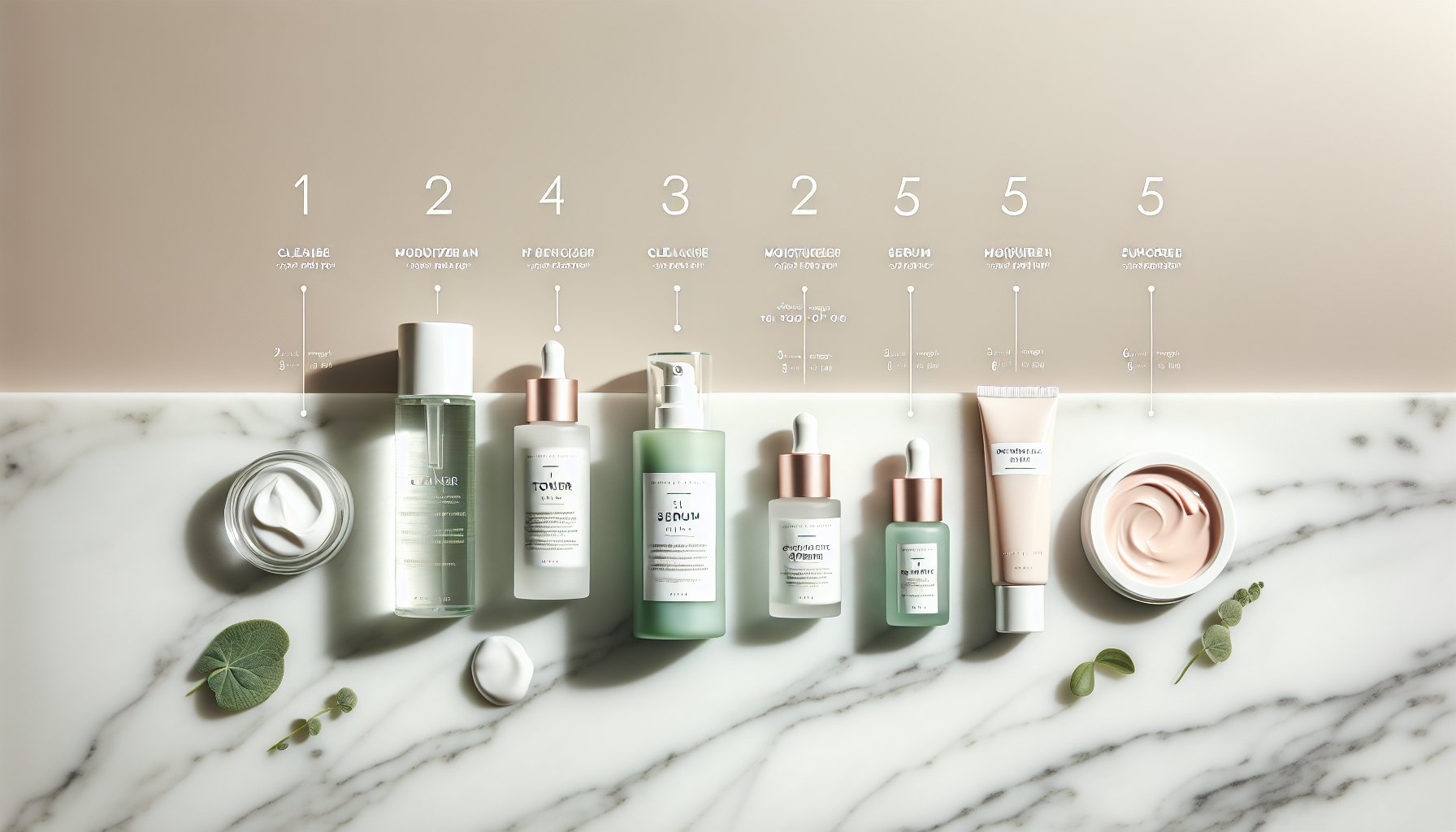
A 2023 study in the Journal of Clinical and Aesthetic Dermatology found that patients who followed a consistent, simplified skincare routine for 12 weeks saw a 34% improvement in overall skin quality scores compared to those with no structured regimen. The takeaway is clear: you don't need dozens of products, but you do need a plan. Here's how to build one that actually works.
Quick Summary:
- Every effective skincare routine needs just three core steps: cleanser, moisturizer, and sunscreen
- Apply products from thinnest to thickest consistency for best absorption
- Introduce new active ingredients one at a time, waiting two weeks between additions
- Morning routines focus on protection; evening routines focus on repair
- Consistency matters more than complexity — a simple routine you follow daily beats an elaborate one you skip
Why You Need a Skincare Routine
Your skin faces UV radiation, pollution, and environmental stress every single day. Without a structured approach to care, these factors accelerate visible aging, cause uneven tone, and weaken your skin barrier over time.
According to the American Academy of Dermatology (AAD), a basic daily routine can prevent common skin problems and keep your complexion looking its healthiest at any age.
The good news? You don't need ten steps or a hundred-dollar budget. Three core products handle the essentials. Everything else is customization based on your specific skin type and goals.
The Three Essential Steps
Every skincare routine, regardless of skin type or concern, is built on the same foundation. Master these three steps before adding anything else.
Step 1: Cleanser
Cleansing removes dirt, oil, makeup, sunscreen, and environmental pollutants that accumulate on your skin. Skipping this step means every product you apply afterward sits on top of a layer of grime.
Choose a gentle, pH-balanced cleanser that cleans without stripping. The AAD recommends avoiding harsh soaps and cleansers that leave your skin feeling tight or dry.
For most skin types, CeraVe Hydrating Facial Cleanser (around $16) is a solid starting point. It contains ceramides and hyaluronic acid that support your skin barrier while cleaning effectively. If you have oily or acne-prone skin, a gentle foaming formula works better — check our guide to choosing a cleanser for specific recommendations.
How to cleanse properly:
- Use lukewarm water (hot water strips natural oils)
- Massage cleanser for 60 seconds — most people rush this step
- Rinse thoroughly and pat dry with a clean towel
Step 2: Moisturizer
Moisturizer serves two purposes: it adds hydration to your skin and locks it in. Even oily skin needs moisturizer — skipping it can actually trigger more oil production as your skin tries to compensate.
A 2019 study published in the Journal of Drugs in Dermatology found that regular moisturizer use improved skin barrier function by up to 28% over eight weeks, reducing transepidermal water loss significantly.
Look for a formula with proven humectants (like hyaluronic acid or glycerin) and occlusives (like ceramides or squalane). La Roche-Posay Toleriane Double Repair Moisturizer (around $20) delivers both in a lightweight formula suitable for most skin types. For a budget option, Vanicream Daily Facial Moisturizer (around $14) keeps things simple with minimal ingredients — ideal if your skin reacts to everything.
Step 3: Sunscreen (Morning Only)
Sunscreen is the single most effective anti-aging product you can own. A landmark 2013 study in the Annals of Internal Medicine demonstrated that daily sunscreen use slowed skin aging by 24% compared to occasional use. No serum, cream, or treatment comes close to that level of prevention.
Apply a broad-spectrum SPF 30 or higher every morning, even on cloudy days and even if you work indoors (UVA rays penetrate windows). Use about a nickel-sized amount for your face.
Neutrogena Ultra Sheer Dry-Touch Sunscreen SPF 55 (around $12) is a widely available, affordable option that layers well under makeup. For a deeper breakdown of options, see our complete sunscreen guide.
Verdict: A three-step routine of cleanser, moisturizer, and sunscreen covers 80% of what your skin needs. Start here, stay consistent for four weeks, and only add new products after you've established this foundation.
Building Your Morning Routine
Your morning routine is about protection. You're preparing your skin to face UV exposure, pollution, and environmental damage throughout the day.
Morning routine order:
- Cleanser — A gentle rinse is enough in the morning. If your skin isn't oily, plain water works too.
- Treatment serum (optional) — Antioxidants like vitamin C work best during the day. The Ordinary Ascorbic Acid 8% + Alpha Arbutin 2% (around $12) is a beginner-friendly option.
- Moisturizer — Apply while skin is still slightly damp to lock in hydration.
- Sunscreen — Always the last step before makeup. Wait 1-2 minutes for it to set.
For a detailed guide on the exact order of every product type, see our skincare product order guide.
Building Your Evening Routine
Your evening routine is about repair and active treatment. At night, your skin's cell turnover rate increases, making it the best time to use ingredients that actively improve your skin.
Evening routine order:
- Cleanser — This is when thorough cleansing matters most. If you wore sunscreen or makeup, consider a double cleanse (oil-based cleanser first, then your regular cleanser).
- Treatment (optional) — This is the time for active ingredients like retinol, chemical exfoliants, or niacinamide. Paula's Choice 2% BHA Liquid Exfoliant (around $34) is an excellent option for unclogging pores and smoothing texture — use it 2-3 times per week to start.
- Moisturizer — You can use a richer formula at night than in the morning since you don't need to worry about sunscreen layering or a matte finish.
How to Customize Your Routine
Once your three-step foundation is solid and your skin has adjusted (give it at least four weeks), you can start layering in targeted treatments. The key is going slow.
Adding Active Ingredients
Active ingredients are the products that actively change your skin — they treat acne, fade dark spots, reduce wrinkles, or improve texture. Common actives include:
- Retinol — The gold standard for anti-aging and acne prevention. Start with a low concentration (0.25-0.5%) and apply 2-3 nights per week.
- Niacinamide — Reduces redness, minimizes pores, and strengthens the skin barrier. Works well for almost every skin type and concern.
- Salicylic acid (BHA) — Penetrates pores to clear breakouts and blackheads. Best for oily and acne-prone skin.
- Hyaluronic acid — A hydration booster that holds up to 1,000 times its weight in water. Technically a humectant, not an active, but it pairs well with everything.
The One-at-a-Time Rule
Introduce one new product at a time and wait at least two weeks before adding another. This does two things: it lets you identify what's causing a reaction if one occurs, and it lets your skin adjust gradually. Many "bad reactions" to skincare are actually the result of overwhelming the skin with too many new ingredients at once.
Know Your Skin Type
Your skin type determines which specific products work best for you. Oily skin benefits from lightweight, gel-based moisturizers and BHA exfoliants. Dry skin responds to richer creams with ceramides and heavier occlusives. If you're not sure where you fall, start with our skin type assessment before shopping.
Common Mistakes When Building a Routine
Starting with too many products. The urge to overhaul everything at once is strong, but it backfires. Begin with three products. Seriously.
Switching products too quickly. Most skincare ingredients need 4-12 weeks to show results. If you swap products every few days, you'll never know what's working.
Skipping sunscreen. Every dermatologist will tell you the same thing: sunscreen is non-negotiable. The research is overwhelming and consistent.
Over-cleansing. Washing your face more than twice a day or using harsh cleansers disrupts your skin barrier, leading to dryness, irritation, and paradoxically, more breakouts.
Ignoring your skin barrier. If your skin feels tight, stings when you apply products, or looks red and flaky, your barrier is compromised. Strip your routine back to cleanser and moisturizer until it heals.
Frequently Asked Questions
How many products do I really need in a skincare routine?
Three: a cleanser, a moisturizer, and sunscreen. That covers the essentials. Active treatments like retinol or vitamin C are beneficial additions, but they're extras — not requirements. A simple routine you follow every day will always outperform a complex one you abandon after a week.
What order should I apply skincare products?
Apply products from thinnest to thickest consistency. A typical morning order is: cleanser, toner (if using), serum, moisturizer, sunscreen. At night: cleanser, treatment/active, moisturizer. Sunscreen always goes last in the morning. For a detailed breakdown, read our product order guide.
How long does it take to see results from a new routine?
Most skincare ingredients need 4-8 weeks of consistent use before visible changes appear. Hydrating ingredients like hyaluronic acid show results fastest (often within days), while anti-aging ingredients like retinol take 8-12 weeks. Resist the urge to quit early.
Can I use the same routine morning and night?
Your morning and evening routines should share some products (cleanser, moisturizer) but differ in others. Sunscreen is morning-only. Active treatments like retinol and most chemical exfoliants are evening-only. Antioxidants like vitamin C work best in the morning when they can boost your UV protection.
Do I need a toner in my routine?
Toners are optional. Modern formulations can deliver hydration (hyaluronic acid toners) or gentle exfoliation (BHA/AHA toners), but they're not a required step. If your cleanser is gentle and pH-balanced, you can skip toner entirely without any downside.
Should I change my routine with the seasons?
Yes, minor adjustments help. In winter, you may need a richer moisturizer and a hydrating serum to combat dryness. In summer, lighter textures and more diligent sunscreen application make sense. Your core routine stays the same — the products just shift in weight and texture.
What if a product causes breakouts?
Stop using it immediately and return to your basic three-step routine. A true breakout from a product (as opposed to a purge from actives like retinol or BHA) will show up as new pimples in areas where you don't usually break out. Give your skin 1-2 weeks to calm down before trying anything new.
How do I know if my skin is purging or breaking out?
Purging only happens with active ingredients that increase cell turnover — retinol, AHAs, BHAs. It occurs in your usual breakout zones, appears within the first 2-6 weeks of use, and clears up on its own. New breakouts in unusual areas, or reactions to products without actives (like a new moisturizer), are not purging — they're a sign the product doesn't work for you.
Is expensive skincare better than drugstore skincare?
Not necessarily. The active ingredients in a $15 CeraVe moisturizer and a $60 prestige brand are often identical — ceramides, hyaluronic acid, niacinamide. Formulation matters more than price point, and drugstore brands like CeraVe, Neutrogena, and Vanicream are dermatologist-recommended for good reason.
At what age should I start a skincare routine?
The AAD recommends establishing basic skincare habits — cleansing and sun protection — during adolescence. A full routine with active ingredients like retinol is appropriate starting in your mid-20s for prevention. But there's no wrong time to start: the best age to begin a routine is right now.
Can I build an effective routine on a budget?
Absolutely. A complete starter routine can cost under $40. A drugstore cleanser (around $10-16), a basic moisturizer (around $12-15), and sunscreen (around $10-12) deliver everything your skin needs. Active treatments from brands like The Ordinary start at $6-12. Price is not a barrier to good skin.
The Bottom Line
Building a skincare routine comes down to three non-negotiable steps: cleanse, moisturize, and protect with sunscreen. Start there, stay consistent, and let your skin adjust before adding actives. The best routine is the one you'll actually follow every day — keep it simple, give it time, and your skin will respond.
Sources:
- Dréno B, et al. "The role of a daily skincare regimen in skin health." Journal of Clinical and Aesthetic Dermatology. 2023;16(5):28-35. https://jcadonline.com/skin-care-regimen-role/
- Hughes MCB, et al. "Sunscreen and prevention of skin aging: a randomized trial." Annals of Internal Medicine. 2013;158(11):781-790. https://www.acpjournals.org/doi/10.7326/0003-4819-158-11-201306040-00002
- Sethi A, et al. "Moisturizers: The slippery road." Indian Journal of Dermatology. 2016;61(3):279-287. https://www.ncbi.nlm.nih.gov/pmc/articles/PMC4885180/
- American Academy of Dermatology. "Skin care tips dermatologists use." https://www.aad.org/public/everyday-care/skin-care-basics/care/skin-care-routine
- Draelos ZD. "The science behind skin care: moisturizers." Journal of Drugs in Dermatology. 2019;18(7):s587. https://jddonline.com/articles/the-science-behind-skin-care-moisturizers/