
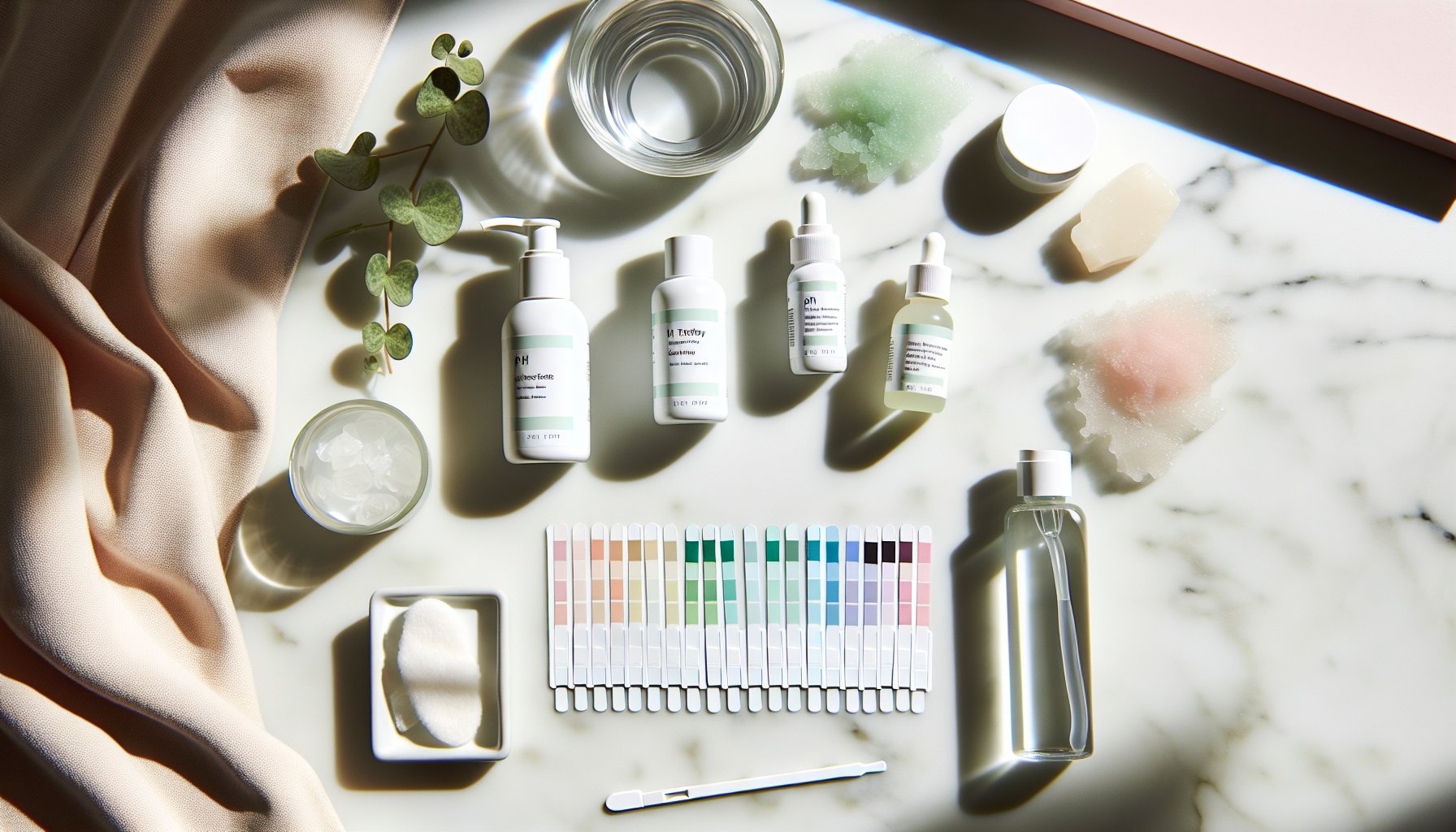
A multicentre study of 330 participants published in the International Journal of Cosmetic Science (2006) by Lambers et al. found that natural skin pH averages just 4.7 — significantly more acidic than the commonly cited 5.5. The research showed that skin maintained below pH 5.0 demonstrated measurably better barrier function, hydration, and microbial balance, with separate research by Li et al. (2023) finding that each one-unit pH increase reduced the skin's antibacterial defense against S. aureus by 68%.
Quick Summary:
- Your skin's natural pH is approximately 4.7, maintained by the acid mantle — a thin acidic film that protects the barrier, fights bacteria, and regulates moisture
- Cleansers with pH above 7.0 (alkaline) disrupt the acid mantle for up to six hours after a single wash, increasing sensitivity and dryness
- Active ingredients like vitamin C, AHAs, and BHAs require specific pH ranges to penetrate the skin and work effectively
- The ideal cleanser pH is 4.5-5.5 — matching your skin's natural acidity preserves the barrier and supports healthy microbiome balance
- Even plain tap water (pH ~8.0) temporarily raises skin pH, which is why toners and pH-adjusting products exist
What Is pH and Why Does It Matter for Skin?
pH measures how acidic or alkaline a substance is on a scale of 0 (most acidic) to 14 (most alkaline), with 7 being neutral. Your skin maintains a naturally acidic surface pH — the acid mantle — that serves as a first line of defense against environmental threats.
The acid mantle is created by a combination of filaggrin degradation products, free fatty acids from sebum, lactic acid from sweat, and amino acids. This thin acidic film performs three functions that directly affect how your skin looks and feels:
Barrier protection. The acidic pH maintains the lipid matrix between skin cells — the same ceramide-cholesterol-fatty acid structure described in our skin barrier guide. When pH rises above 5.5, the enzymes that process these barrier lipids malfunction, leading to increased transepidermal water loss (TEWL), dryness, and sensitivity.
Antimicrobial defense. A study published in Clinical, Cosmetic and Investigational Dermatology (2023) by Li et al. found that lower skin pH directly increased antibacterial activity — each one-unit decrease in pH corresponded to a 68% increase in S. aureus cell death on the skin surface. When pH rises, pathogenic bacteria thrive while beneficial microbes decline.
Enzyme regulation. The enzymes responsible for cell turnover (desquamation), lipid synthesis, and ceramide processing all function optimally within a narrow acidic pH range. Disrupting this range slows skin renewal and impairs the barrier's ability to repair itself.
How Products Affect Your Skin's pH
Every product you apply temporarily shifts your skin's pH. Some shifts are beneficial (pH-dependent actives); others are damaging (alkaline cleansers).
Cleansers. This is where pH matters most in daily skincare. A study published in Current Problems in Dermatology (2018) by Blaak and Staib found that a single wash — even with water alone — raises skin pH for several hours. Alkaline cleansers (bar soaps typically range from pH 9-11) can disrupt the acid mantle for six or more hours, during which the barrier is vulnerable to irritation, moisture loss, and bacterial imbalance.
The Lambers et al. study showed that tap water alone (pH ~8.0) raised skin pH for up to six hours before returning to baseline. This means your cleanser's pH directly determines how long your barrier stays compromised after washing.
The ideal cleanser pH is 4.5-5.5. This matches your skin's natural acidity and minimizes post-wash disruption. CeraVe Hydrating Facial Cleanser (around $16) and COSRX Low pH Good Morning Gel Cleanser (around $12) are both formulated within this range.
Active ingredients and pH. Certain actives require specific pH environments to work:
- Vitamin C (L-ascorbic acid): Must be formulated at pH below 3.5 to penetrate the skin. A study by Pinnell et al. in Dermatologic Surgery (2001) confirmed that L-ascorbic acid at higher pH values fails to deliver vitamin C to the skin. This is why vitamin C serums feel acidic and why they're applied on clean, bare skin before other products.
- AHAs (glycolic acid, lactic acid): Most effective at pH 3.0-4.0. At higher pH, the acid becomes more ionized and less able to penetrate the stratum corneum for exfoliation.
- BHAs (salicylic acid): Optimal at pH 3.0-4.0. Paula's Choice 2% BHA Liquid Exfoliant (around $32) is formulated at pH 3.2-3.8 for maximum effectiveness.
- Niacinamide: Stable across a wide pH range (4.0-7.0), which is why it pairs well with most products and rarely causes pH-related issues.
Verdict: Your skin's acid mantle (pH ~4.7) is a functional defense system, not just a number. Alkaline cleansers disrupt it for hours, increasing sensitivity and dryness. Use a cleanser at pH 4.5-5.5, apply pH-dependent actives (vitamin C, AHAs, BHAs) on clean skin before other products, and understand that every product in your routine temporarily shifts your skin's pH environment.

pH and Skin Conditions
Research published in the Journal of Dermatology (2018) by Proksch confirmed that multiple inflammatory skin conditions are associated with elevated skin pH:
Acne. Higher skin pH promotes the growth of Cutibacterium acnes and disrupts the skin's natural antibacterial defense. Maintaining acidic pH through appropriate cleanser choice supports the microbiome balance that keeps acne-causing bacteria in check.
Eczema and atopic dermatitis. Patients with atopic dermatitis consistently show elevated skin pH and reduced barrier function. The alkaline shift impairs ceramide processing and increases susceptibility to irritants and allergens.
Rosacea. Rosacea-affected skin shows higher pH values and impaired barrier function. Gentle, pH-appropriate cleansing is particularly important for rosacea management.
Aging. Skin pH gradually rises with age as sebum production decreases and the acid mantle weakens. This contributes to the dryness, sensitivity, and slower healing associated with aging skin.
How to Build a pH-Aware Routine
You don't need to test every product with pH strips — but understanding the principles helps you sequence products correctly and avoid common disruptions.
Step 1: Choose a pH-balanced cleanser. This is the single highest-impact pH decision. Avoid bar soaps and foaming cleansers that feel "squeaky clean" — that tight feeling indicates alkaline pH stripping your acid mantle. Vanicream Gentle Facial Cleanser (around $9) is pH-balanced and free of every common irritant. Gel and cream cleansers from brands like CeraVe, Vanicream, and COSRX are formulated at skin-appropriate pH levels.
Step 2: Apply pH-dependent actives first. After cleansing, your skin is at its cleanest and most receptive. Apply vitamin C serum (pH ~3.0) or chemical exfoliants (pH ~3.5) directly on bare, dry skin. Wait two to three minutes before layering other products to allow the active to work at its intended pH.
Step 3: Layer from lowest to highest pH. As a general rule, apply products in order of increasing pH: actives first (pH 3-4), then treatment serums (pH 4-6), then moisturizer (pH 5-7), then sunscreen. This matches the proper product order and ensures each product works in its optimal pH range.
Step 4: Don't mix conflicting pH products. Applying a high-pH product immediately after a low-pH active can neutralize the active before it works. The most common example: applying niacinamide immediately after a vitamin C serum was once thought to cause problems, though current research suggests the interaction is minimal at typical skincare concentrations. A brief wait between products is still good practice.
Common Mistakes to Avoid
Using bar soap on your face. Traditional bar soaps have a pH of 9-11 — far too alkaline for facial skin. Even "gentle" or "moisturizing" bar soaps disrupt the acid mantle significantly. Liquid cleansers formulated for the face are almost always better pH-matched.
Obsessing over exact pH numbers. You don't need to pH-test every product. Focus on the basics: use a gentle, pH-appropriate cleanser, apply actives on clean skin, and layer in the right order. The skin's buffering system can handle moderate pH variations from well-formulated products.
Over-washing. Each wash temporarily raises skin pH. Washing more than twice daily compounds the disruption, and the acid mantle never fully recovers between washes. Twice daily (morning and evening) is sufficient for most people.
Assuming toners fix everything. Some toners claim to "restore pH balance" after cleansing. While a mildly acidic toner can help, it's better to avoid the disruption in the first place by using a properly formulated cleanser. Treating the cause beats treating the symptom.
Ignoring water quality. Hard water (high mineral content) has a higher pH and leaves alkaline mineral deposits on the skin. If you live in a hard water area and experience persistent dryness or irritation, a shower filter or micellar water for facial cleansing can help. See our sensitive skin care guide for more strategies.
Frequently Asked Questions
What pH should a face cleanser be?
Ideally between 4.5 and 5.5 — matching your skin's natural pH. This range cleanses effectively while preserving the acid mantle. Cleansers above pH 7.0 are too alkaline for daily facial use. Check product reviews or brand websites for pH values, or test with inexpensive pH strips from a pharmacy.
Does pH affect how well actives work?
Yes, significantly. L-ascorbic acid (vitamin C) requires pH below 3.5 to penetrate skin. AHAs and BHAs work best at pH 3.0-4.0. At higher pH values, these acids become ionized and can't effectively cross the stratum corneum. This is why applying actives on clean, bare skin (before other products) maximizes their effectiveness.
Can you mix vitamin C and niacinamide?
Yes. The old concern was that combining them at different pH levels would create nicotinic acid (causing flushing). Current research shows this reaction requires extreme heat and concentrations far beyond what skincare products contain. You can apply both in the same routine, though applying vitamin C first and waiting a few minutes before niacinamide is a reasonable precaution.
Why does my skin feel tight after cleansing?
Tightness after cleansing indicates your cleanser is too alkaline and has stripped the acid mantle along with protective lipids. Switch to a pH-balanced gel or cream cleanser (pH 4.5-5.5). Your skin should feel clean but comfortable after washing — never tight or squeaky.
Do I need a pH-adjusting toner?
Not if you're using a properly formulated cleanser. pH-adjusting toners were more necessary when high-pH cleansers were standard. With modern pH-balanced cleansers, an acidic toner is optional. If you want to use one, apply it after cleansing and before actives.
Does water pH affect skin?
Yes. Tap water typically has a pH of 6.5-8.5, and the Lambers et al. study showed it raises skin pH for up to six hours. Hard water (higher pH, more minerals) is particularly problematic. If water quality is a concern, consider using micellar water for cleansing or finishing with a hydrating toner to restore acidity.
What happens if skin pH is too acidic?
While the skin naturally prefers acidity, extremely low pH (below 3.0) from overuse of chemical exfoliants can cause irritation, redness, and paradoxical barrier damage. This is why AHA and BHA products are formulated at pH 3.0-4.0 (not lower) — acidic enough to work, but not so acidic as to damage skin. Over-exfoliation is the most common way people push skin pH too low.
Is micellar water pH-balanced?
Most micellar waters are formulated at pH 5.0-7.0, making them gentle and unlikely to disrupt the acid mantle. This is one reason micellar water works well for sensitive skin — it cleanses without the pH disruption that traditional cleansers can cause.
Does the skin's pH change with age?
Yes. Skin pH gradually increases (becomes less acidic) with age as sebum production declines and the acid mantle weakens. Studies show that skin pH rises from approximately 4.7 in younger adults to above 5.5 in older adults. This shift contributes to the increased dryness, sensitivity, and susceptibility to infection seen in aging skin.
How long does it take for skin pH to recover after washing?
Research shows skin pH takes two to six hours to return to baseline after washing, depending on the cleanser's pH. Alkaline cleansers (bar soap, pH 9+) cause the longest disruption. pH-balanced cleansers (pH 4.5-5.5) minimize recovery time to under an hour in most cases.
Should I test my skin's pH at home?
You can use inexpensive pH test strips to check product pH and even skin pH (press a wet strip against your cheek for a few seconds). However, for most people, this level of monitoring is unnecessary. Simply using a gentle, pH-balanced cleanser and applying actives correctly covers the practical pH considerations. pH testing is most useful if you're troubleshooting persistent irritation or dryness.
The Bottom Line
Your skin's acid mantle (pH ~4.7) protects the barrier, fights bacteria, and regulates moisture. The single most impactful pH decision is your cleanser — choose one at pH 4.5-5.5 to preserve the acid mantle. Apply pH-dependent actives on clean skin before other products. Skip the bar soap and the obsessive pH testing — a few simple choices keep your skin's pH where it needs to be.
Sources:
- Lambers H, et al. "Natural skin surface pH is on average below 5, which is beneficial for its resident flora." International Journal of Cosmetic Science. 2006;28(5):359-370. https://pubmed.ncbi.nlm.nih.gov/18489300/
- Blaak J, Staib P. "The relation of pH and skin cleansing." Current Problems in Dermatology. 2018;54:132-142. https://pubmed.ncbi.nlm.nih.gov/30130782/
- Proksch E. "pH in nature, humans and skin." Journal of Dermatology. 2018;45(9):1044-1052. https://pubmed.ncbi.nlm.nih.gov/29863755/
- Li R, et al. "Association between skin acid mantle, natural moisturizing factors, and antibacterial activity against S. aureus in the stratum corneum." Clinical, Cosmetic and Investigational Dermatology. 2023;16:1595-1606. https://pmc.ncbi.nlm.nih.gov/articles/PMC10292209/
- Schmid-Wendtner MH, Korting HC. "The pH of the skin surface and its impact on the barrier function." Skin Pharmacology and Physiology. 2006;19(6):296-302. https://pubmed.ncbi.nlm.nih.gov/16864974/