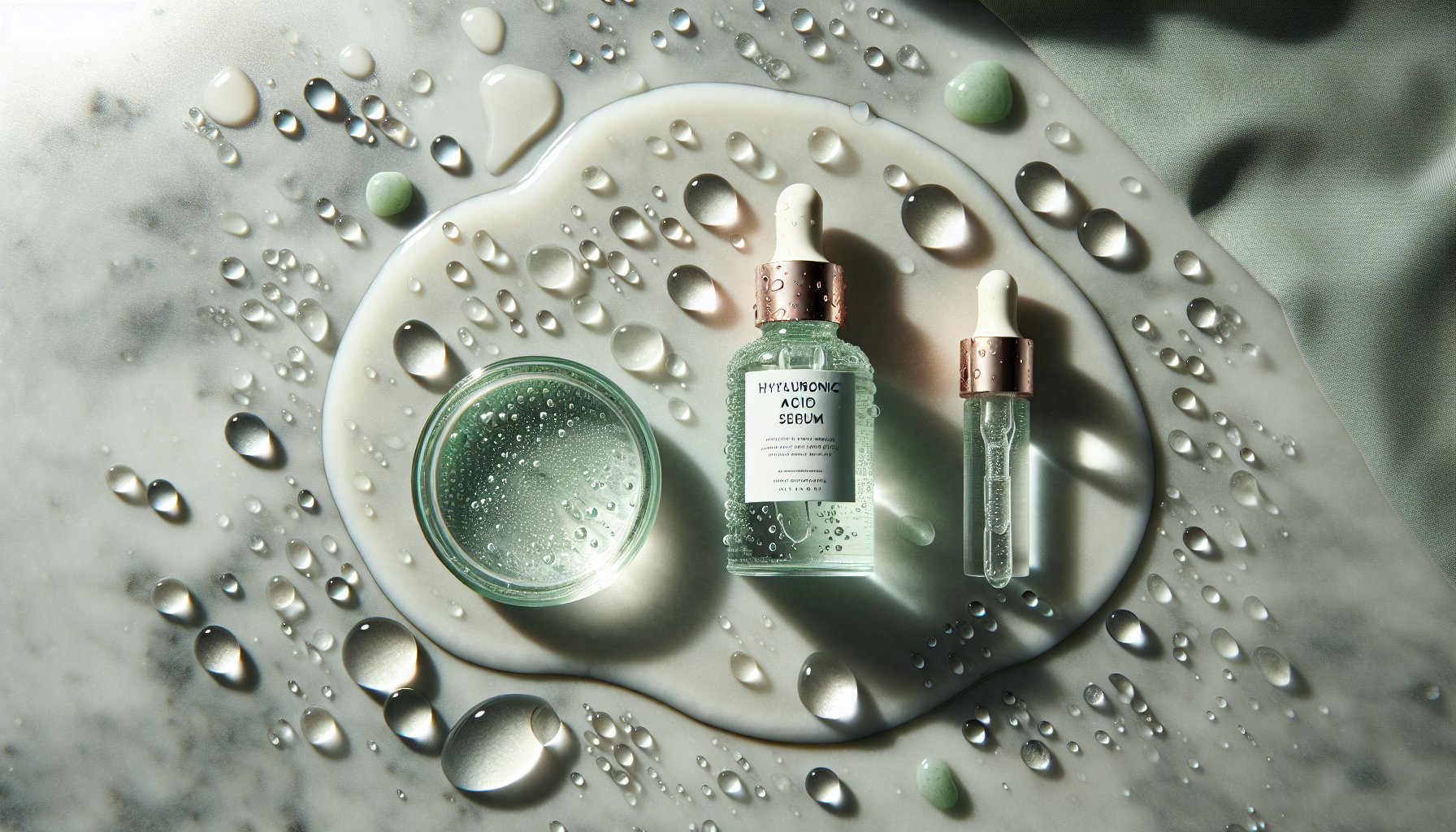
Hyaluronic acid (HA) is one of the most studied hydrating ingredients in dermatology, and your body already produces it. A single gram of hyaluronic acid can hold up to six liters of water, according to research published in the International Journal of Biological Macromolecules. That water-binding capacity is why HA shows up in everything from drugstore moisturizers to clinical-grade serums — and why it earned its reputation as skincare's go-to humectant.
Quick Summary:
- Hyaluronic acid is a naturally occurring molecule that holds up to 1,000 times its weight in water
- Molecular weight matters: low-weight HA penetrates deeper, while high-weight HA hydrates the surface
- Apply HA to damp skin and seal it with a moisturizer for the best results
- HA works for all skin types, including oily and acne-prone skin
- Topical HA has been shown to reduce wrinkle depth by up to 40% in clinical trials
What Is Hyaluronic Acid?
Hyaluronic acid is a glycosaminoglycan — a type of sugar molecule — that occurs naturally in your skin, connective tissue, and eyes. About 50% of the body's total HA is found in the skin, where it sits in the extracellular matrix between cells, keeping tissue hydrated and structurally supported.
Despite the name, hyaluronic acid is not an exfoliating acid like salicylic acid or glycolic acid. It has a neutral pH and does not dissolve dead skin cells. Instead, it functions as a humectant, pulling water from the environment and deeper skin layers to keep the outer layers plump and hydrated.
Your body produces HA naturally, but production declines with age. By your mid-40s, your skin's HA content has dropped to roughly half of what it was in your 20s. This decline contributes directly to dryness, fine lines, and loss of volume — which is why topical HA has become a staple in anti-aging routines.
How Hyaluronic Acid Works on Skin
The magic of HA comes down to its molecular structure. Each HA molecule has a massive number of binding sites for water. When applied topically, it creates a moisture reservoir on and within the skin that reduces transepidermal water loss (TEWL) — the process by which water evaporates from your skin into the air.
The Role of Molecular Weight
Not all hyaluronic acid is created equal. HA molecules come in different sizes, measured in kilodaltons (kDa), and the size determines how the ingredient interacts with your skin:
- High molecular weight (1,000-1,800 kDa): These large molecules sit on the skin's surface. They form a breathable, moisture-retaining film that reduces TEWL and provides immediate plumping. They cannot penetrate the stratum corneum.
- Medium molecular weight (100-1,000 kDa): These molecules partially penetrate the outer skin layers, offering both surface hydration and some deeper moisturizing effects.
- Low molecular weight (20-100 kDa): Small enough to penetrate beyond the stratum corneum, these molecules hydrate deeper layers of the epidermis. A 2011 study in the Journal of Cosmetic Dermatology found that low molecular weight HA at 50 kDa significantly improved skin hydration, elasticity, and wrinkle depth compared to placebo.
- Ultra-low molecular weight (under 20 kDa): Also called nano-hyaluronic acid, these fragments penetrate the deepest. Research shows they can reach the dermis and may stimulate the skin's own HA production.
The most effective HA products combine multiple molecular weights to hydrate at every level. This multi-weight approach delivers both instant surface smoothing and sustained deep hydration.
Benefits of Hyaluronic Acid for Skin
Research consistently backs HA as one of the most effective topical hydrators available. Here is what the evidence shows:
Deep hydration. A 2014 study in the Journal of Clinical and Aesthetic Dermatology demonstrated that a topical HA product increased skin hydration by 96% after eight weeks of use. Participants applied the product twice daily.
Wrinkle reduction. A randomized controlled trial published in the Journal of Cosmetic Dermatology found that a nano-hyaluronic acid formulation reduced wrinkle depth by 40% and improved skin firmness by 55% after eight weeks.
Skin barrier support. HA reinforces the skin's moisture barrier, which helps protect against environmental irritants. This makes it especially valuable for people dealing with dry, compromised skin.
Compatibility with other actives. HA plays well with virtually every other skincare ingredient — retinol, niacinamide, vitamin C, peptides. Its gentle, non-irritating nature makes it a safe addition to any routine. If you are unsure about how to layer your products, HA is almost always a safe bet right after cleansing.
Suitable for all skin types. Because HA is naturally present in your body, allergic reactions are extremely rare. It is lightweight, non-comedogenic, and works just as well on oily skin as it does on dry skin.
Verdict: Hyaluronic acid is one of the safest, most effective hydrating ingredients available. It works for every skin type, pairs with virtually any active, and has strong clinical evidence supporting its ability to reduce wrinkles and boost skin moisture. If your routine lacks a dedicated hydrating step, HA is the place to start.
How to Apply Hyaluronic Acid
Getting the most out of HA requires proper technique:
Step 1: Cleanse your skin. Start with a clean face so HA makes direct contact with skin.
Step 2: Apply to damp skin. This is the single most important rule. Because HA is a humectant, it needs water to bind to. If you apply it to dry skin in a dry environment, it can pull moisture from deeper skin layers. After cleansing, pat your face so it is still slightly damp.
Step 3: Apply 2-3 drops of serum. Spread evenly across your face and neck using gentle pressing motions.
Step 4: Seal with a moisturizer. Within 60 seconds, follow up with a good moisturizer to lock in hydration. This occlusive layer prevents the water HA attracted from evaporating.
Step 5: Use morning and night. HA is gentle enough for twice-daily use. In the morning, apply before sunscreen. At night, apply before your moisturizer or sleeping mask.
If you live in a low-humidity environment (below 40%), take extra care: always apply HA to damp skin and seal it immediately with a moisturizer or facial oil. Without this step, HA can draw water from your skin instead of the air.
Best Hyaluronic Acid Products
These are well-formulated HA products across different price points that deliver real results:
Budget pick: The Ordinary Hyaluronic Acid 2% + B5 (around $8) combines low, medium, and high molecular weight HA with vitamin B5 for enhanced hydration. It is no-frills, effective, and hard to beat at this price.
Drugstore favorite: Neutrogena Hydro Boost Water Gel (around $20) is a lightweight gel-cream moisturizer built around hyaluronic acid. It absorbs quickly, layers well under makeup, and works for oily to combination skin types.
Dermatologist-recommended: La Roche-Posay Hyalu B5 Serum (around $35) features two types of HA plus vitamin B5 (panthenol) for repair and hydration. It has a silky texture that layers beautifully under other products.
Pharmacy staple: CeraVe Hydrating Hyaluronic Acid Serum (around $18) pairs HA with ceramides and vitamin B5 in a fragrance-free formula. The ceramides add extra barrier support, making this a solid option if your skin runs dry or sensitive.
European favorite: Vichy Mineral 89 (around $30) combines HA with Vichy's mineralizing thermal water in a lightweight, hydrating booster. It works as a primer-like first step in your routine and absorbs almost instantly.
Common Mistakes with Hyaluronic Acid
Applying to dry skin. HA needs water to work with. Apply it to damp skin or spritz your face with a facial mist before application.
Skipping moisturizer afterward. HA attracts water but cannot lock it in on its own. Without an occlusive layer, the moisture evaporates. Always follow with moisturizer.
Expecting it to replace moisturizer. HA serums add water to the skin but lack the emollients and occlusives needed to keep it there. Think of HA as step one of your hydration strategy, not the entire plan.
Using too much product. Two to three drops covers your entire face. More product does not mean more hydration.
Assuming all HA products are equal. Molecular weight blend and supporting ingredients affect performance more than concentration. A well-formulated 0.5% multi-weight serum outperforms a single-weight 2% product.
Frequently Asked Questions
Can hyaluronic acid cause breakouts?
Hyaluronic acid itself is non-comedogenic and does not cause breakouts. However, some HA products contain comedogenic ingredients like certain oils or silicones. If you break out from an HA product, check the full ingredient list — the HA is almost certainly not the culprit.
Is hyaluronic acid safe during pregnancy?
Yes. Hyaluronic acid is considered safe for topical use during pregnancy and breastfeeding. Because it is a substance your body naturally produces, it poses no known risk. It is one of the few active ingredients dermatologists universally approve for pregnant patients.
Can I use hyaluronic acid with retinol?
Absolutely. HA and retinol are one of the best pairings in skincare. Retinol can cause dryness and irritation, especially when you first start using it, and HA helps counteract that by keeping the skin hydrated. Apply HA first, then retinol, then moisturizer.
How long does hyaluronic acid take to show results?
You will notice an immediate plumping effect within minutes of application — that is the high molecular weight HA forming a moisture film. For lasting improvements in hydration, fine lines, and skin texture, expect four to eight weeks of consistent twice-daily use.
Does hyaluronic acid actually penetrate the skin?
High molecular weight HA does not penetrate — it sits on the surface and hydrates from above. Low and ultra-low molecular weight HA (below 100 kDa) can penetrate the stratum corneum and reach deeper epidermal layers. This is why multi-weight formulations are preferred.
Should I use hyaluronic acid in the morning or at night?
Both. HA is gentle enough for twice-daily application. In the morning, it provides a hydrated base under sunscreen and makeup. At night, it supports skin repair by maintaining optimal hydration levels while you sleep.
Can hyaluronic acid dry out my skin?
In very low-humidity environments, HA can draw moisture from deeper skin layers if there is no water available in the air. The simple prevention: apply to damp skin and always seal with moisturizer. Done correctly, HA will not dry you out.
What concentration of hyaluronic acid is best?
Clinical studies show benefits at concentrations as low as 0.1%. Most serums contain 0.5% to 2%. Higher is not always better — the formulation (molecular weight blend, pH, supporting ingredients) matters more than the percentage on the label.
Is sodium hyaluronate the same as hyaluronic acid?
Sodium hyaluronate is the salt form of hyaluronic acid. It has a smaller molecular size, which allows better skin penetration and stability in formulations. Functionally, both deliver the same hydrating benefits. Most skincare products actually contain sodium hyaluronate rather than pure hyaluronic acid.
Can I use hyaluronic acid if I have oily skin?
Yes — HA is one of the best ingredients for oily skin. It provides hydration without adding oil, which helps balance moisture levels. Dehydrated oily skin often overproduces sebum to compensate for water loss, and HA directly addresses that underlying dehydration.
Does drinking water have the same effect as applying hyaluronic acid?
Not quite. While staying hydrated is important for overall health, drinking water does not deliver targeted hydration to the outer skin layers the way topical HA does. Research shows that topical application directly increases stratum corneum hydration in a way that oral hydration alone cannot achieve.
The Bottom Line
Hyaluronic acid is a proven, gentle hydrator backed by decades of dermatological research. It works for every skin type, pairs safely with other actives, and delivers both immediate plumping and long-term hydration improvements. Apply it to damp skin, seal it with moisturizer, and use it twice daily. At any price point, it is one of the smartest additions you can make to your routine.
Sources:
- Papakonstantinou E, Roth M, Karakiulakis G. Hyaluronic acid: A key molecule in skin aging. Dermato-Endocrinology. 2012;4(3):253-258. https://www.ncbi.nlm.nih.gov/pmc/articles/PMC3583886/
- Pavicic T, Gauglitz GG, Lersch P, et al. Efficacy of cream-based novel formulations of hyaluronic acid of different molecular weights in anti-wrinkle treatment. Journal of Drugs in Dermatology. 2011;10(9):990-1000. https://pubmed.ncbi.nlm.nih.gov/21931055/
- Essendoubi M, Gobinet C, Reynaud R, Anber F, Manfait M, Piot O. Human skin penetration of hyaluronic acid of different molecular weights as probed by Raman spectroscopy. Skin Research and Technology. 2016;22(1):55-62. https://pubmed.ncbi.nlm.nih.gov/25877232/
- Jegasothy SM, Zabolotniaia V, Bielfeldt S. Efficacy of a new topical nano-hyaluronic acid in humans. Journal of Clinical and Aesthetic Dermatology. 2014;7(3):27-29. https://www.ncbi.nlm.nih.gov/pmc/articles/PMC3970829/
- Bukhari SNA, Roswandi NL, Waqas M, et al. Hyaluronic acid, a promising skin rejuvenating biomedicine: A review of recent updates and pre-clinical and clinical investigations. International Journal of Biological Macromolecules. 2018;120(Pt B):1682-1695. https://pubmed.ncbi.nlm.nih.gov/30287361/