
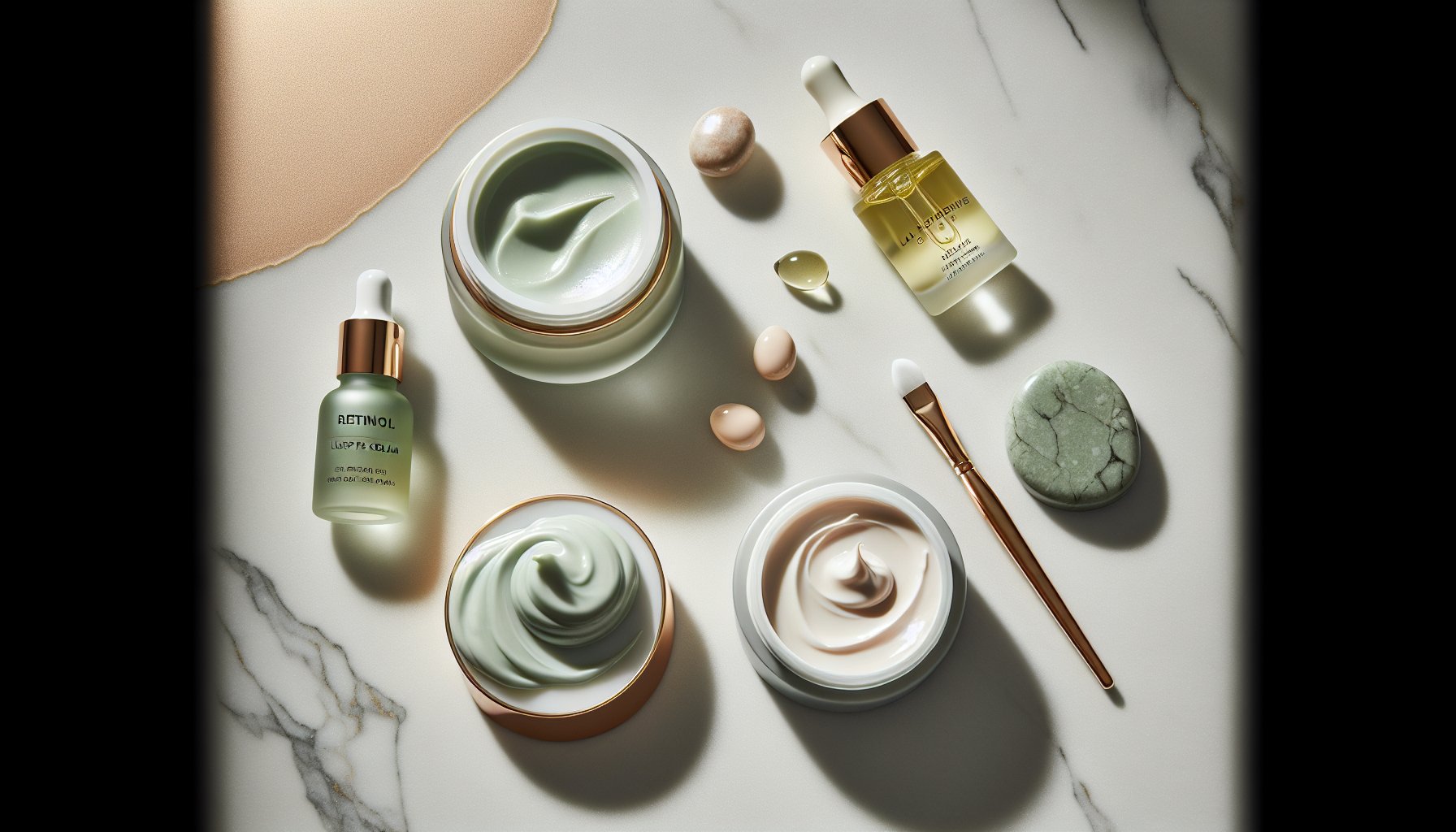
According to the American Academy of Dermatology, skin loses approximately 30% of its collagen during the first five years of menopause, followed by an average annual decline of 2.1%. A 2024 narrative review confirmed that 46% of women in perimenopause and menopause experience skin issues including dryness, thinning, and accelerated wrinkling. Understanding these changes is the first step to building a routine that addresses them.
Quick Summary:
- Mature skin faces collagen loss, reduced lipid production, slower cell turnover, and thinning
- Retinoids are the most evidence-backed anti-aging ingredient, stimulating collagen and cell renewal
- Vitamin C provides antioxidant protection and collagen support, especially effective in the morning
- Rich moisturizers with ceramides and hyaluronic acid replace the lipids mature skin no longer produces sufficiently
- Sunscreen remains the single most important product at every age
How Skin Changes with Age
Skin aging involves two parallel processes: intrinsic (chronological) aging driven by genetics and hormones, and extrinsic aging accelerated by UV exposure, pollution, and lifestyle factors.
Collagen decline: Research published in the American Journal of Pathology demonstrated that fibroblast function decreases with age, directly reducing collagen production. Collagen loss begins in your mid-20s at roughly 1% per year, but menopause dramatically accelerates this — the 30% loss in five years represents one of the most rapid structural changes skin undergoes.
Reduced lipid production: The skin's natural oil production decreases significantly with age, particularly after menopause. This leads to dryness, increased transepidermal water loss, and a compromised barrier that allows irritants and allergens to penetrate more easily.
Slower cell turnover: Cell renewal that took 28 days in your 20s can stretch to 45-60 days by your 50s and beyond. Dead cells accumulate on the surface, creating a dull, rough appearance and reducing the effectiveness of topical treatments that need to reach living cells.
Skin thinning: The epidermis and dermis both lose thickness over time. Thinner skin is more vulnerable to damage, slower to heal, and shows blood vessels and discoloration more prominently.
Hormonal shifts: Estrogen decline in menopause directly affects collagen synthesis, elasticity, and hydration. The AAD notes that skin loses fat, becomes thinner, and bruises more easily during this transition.
The Mature Skin Routine
Morning Routine
Step 1: Gentle cleanser. Mature skin can't tolerate stripping. Switch from foaming to cream or lotion cleansers that clean without removing the limited natural oils your skin still produces. CeraVe Hydrating Facial Cleanser (around $16) adds ceramides and hyaluronic acid during the cleansing step.
Step 2: Vitamin C serum. A 12-week clinical study comparing 10.5% vitamin C to 0.075% retinol found that vitamin C was more effective for treating marionette lines and improving overall tone and texture, while retinol was superior for pigmentation. Using vitamin C in the morning provides antioxidant protection against daily UV and pollution exposure while stimulating collagen synthesis. See our vitamin C guide for product options.
Step 3: Rich moisturizer. Mature skin needs more than lightweight lotions. Choose a cream with ceramides, hyaluronic acid, and glycerin to replace the lipids your skin no longer produces adequately. CeraVe Moisturizing Cream (around $16) delivers three essential ceramides with MVE technology for extended hydration.
Step 4: Sunscreen SPF 30+. UV damage accounts for up to 80% of visible facial aging. Protecting your skin from further damage is more impactful than any treatment product. EltaMD UV Clear SPF 46 (around $40) provides broad-spectrum protection with niacinamide and works well under makeup.
Evening Routine
Step 1: Gentle cleanser. Double cleanse if you wore sunscreen or makeup — an oil-based cleanser first to dissolve these products, then your regular cleanser. See our double cleansing guide.
Step 2: Retinoid. Tretinoin is considered the most effective retinoid for anti-aging, with proven ability to stimulate collagen synthesis, accelerate cell turnover, and reduce fine lines. A 2022 review confirmed that 1% topical retinol inhibited metalloproteinases and stimulated collagen production in both aged and photoaged skin.
Start with an over-the-counter retinol like CeraVe Resurfacing Retinol Serum (around $20), which combines retinol with ceramides to minimize irritation. Begin twice weekly and increase gradually. See our retinol guide for the full introduction protocol.
Step 3: Night cream or rich moisturizer. Seal in your retinoid with a barrier-supporting moisturizer. Mature skin benefits from richer textures at night when the skin's repair processes are most active.
Verdict: The most effective mature skin routine pairs vitamin C in the morning (antioxidant protection plus collagen support) with a retinoid at night (cell renewal plus collagen stimulation). Layer both over ceramide-rich moisturizers to address the lipid loss that defines mature skin, and never skip sunscreen.
Key Ingredients for Mature Skin
Retinoids: The gold standard for anti-aging with the most clinical evidence. They increase cell turnover, boost collagen, and improve texture, tone, and fine lines. Start gentle and increase gradually — mature skin can be more sensitive to retinoid irritation due to a thinner barrier.
Vitamin C: Stimulates collagen synthesis and neutralizes free radicals from UV exposure. Most effective at concentrations of 10-20% in an L-ascorbic acid formulation. Morning application provides daytime antioxidant defense.
Hyaluronic acid: Holds up to 1,000 times its weight in water, plumping the skin surface and reducing the appearance of fine lines. Apply to damp skin for best results. See our hyaluronic acid guide.
Ceramides: Replace the declining lipids in mature skin's barrier. Essential in both cleansers and moisturizers to maintain hydration and protect against irritant penetration.
Peptides: Signal fibroblasts to produce more collagen. Gentler than retinoids with no irritation — ideal as a complementary ingredient or for those who can't tolerate retinoids. See our peptides guide.
Niacinamide: Strengthens the barrier, reduces inflammation, and improves uneven pigmentation. Works well with every other ingredient on this list. See our niacinamide guide.
Addressing Specific Mature Skin Concerns
Fine lines and wrinkles: Retinoids plus vitamin C provide the strongest combination. Add peptides in the morning for additional collagen stimulation without irritation.
Age spots and uneven tone: Vitamin C, niacinamide, and azelaic acid all address hyperpigmentation through different pathways. See our hyperpigmentation guide for a comprehensive treatment plan.
Dryness and dehydration: Layer a hyaluronic acid serum under a ceramide-rich cream. Consider slugging with a thin layer of petroleum jelly over your night cream once or twice weekly to lock in maximum moisture.
Loss of firmness: Retinoids and peptides both stimulate collagen and elastin production. Results are gradual — expect months of consistent use for visible firming.
Under-eye concerns: The skin around your eyes is thinnest and shows age earliest. CeraVe Eye Repair Cream (around $15) combines peptides with ceramides specifically for this delicate area. See our dark circles guide.
Common Mistakes with Mature Skin
Using the same routine from your 30s. Skin needs change significantly with age. Lightweight gels and foaming cleansers that worked for oily, younger skin may now be too stripping. Reassess your products as your skin's needs evolve.
Overloading on anti-aging products. More products don't equal faster results. A well-chosen retinoid, vitamin C, and moisturizer outperform a complicated routine of ten mediocre products. See our minimalist routine guide.
Neglecting the neck and chest. These areas age just as quickly as the face but are often neglected. Extend your routine — especially sunscreen and retinoid — below the jawline.
Skipping sunscreen because "the damage is done." UV damage is cumulative, and sun protection at any age prevents further collagen breakdown, new pigmentation, and skin cancer risk.
Frequently Asked Questions
At what age should I start an anti-aging routine?
Prevention is most effective in your late 20s to early 30s when collagen decline begins. However, it's never too late to start — retinoids produce measurable improvement in skin quality at any age, and sunscreen prevents further damage regardless of when you begin.
Can mature skin tolerate retinoids?
Yes, but start more cautiously than younger skin would. Begin with a low-concentration retinol (0.25-0.5%) twice weekly, increasing gradually over two to three months. Buffer by applying retinol over moisturizer if irritation occurs. Our introducing new products guide covers the buffering technique.
Is it too late for sunscreen to help?
Never. While sunscreen can't reverse existing damage, it prevents further collagen degradation, new pigmentation, and reduces skin cancer risk. Research shows that daily sunscreen use slows visible aging at any starting age.
What's the best moisturizer for mature skin?
Look for rich creams containing ceramides, hyaluronic acid, glycerin, and peptides. Avoid lightweight gels — mature skin needs the occlusive and emollient properties of heavier formulations to compensate for decreased natural lipid production.
Do peptides work as well as retinoids?
Peptides produce subtler results than retinoids but with zero irritation or photosensitivity. They're best used as a complement — peptides in the morning, retinoid at night — rather than a replacement. For those who can't tolerate retinoids at all, peptides are the strongest gentle alternative.
How does menopause change my skin?
Estrogen decline during menopause accelerates collagen loss (30% in five years), reduces lipid production, thins the skin, and decreases elasticity. Increasing your moisturizer richness, adding barrier-supporting ingredients like ceramides, and maintaining retinoid use all help counteract these changes.
Should mature skin still exfoliate?
Yes, but gently. Slower cell turnover means more dead cell accumulation, making exfoliation beneficial. A gentle AHA (glycolic or lactic acid) once or twice weekly improves product absorption and brightness without the irritation of physical scrubs. See our exfoliation guide.
Can I use vitamin C and retinol together?
Yes, but at different times of day. Vitamin C in the morning provides antioxidant protection during sun exposure, while retinol at night works during the skin's natural repair cycle. This separation maximizes both ingredients' effectiveness.
What about facial oils for mature skin?
Facial oils can provide an occlusive layer that helps seal in moisture, which benefits dry mature skin. However, they don't replace the specific benefits of retinoids, vitamin C, or ceramide-based moisturizers. Use them as a final step over your serum and moisturizer at night if you need extra hydration.
Are professional treatments worth it for mature skin?
For concerns that topical products can't fully address — deep wrinkles, significant sagging, severe sun damage — professional treatments like microneedling, chemical peels, and laser resurfacing produce more dramatic results. Topical retinoids and vitamin C are the foundation, but professional treatments can accelerate and enhance the improvements.
How long before I see results from a new routine?
Hydration improvements appear within days to weeks. Texture and radiance improve at four to eight weeks. Fine lines, wrinkles, and pigmentation changes require 8-24 weeks of consistent use. The most significant collagen rebuilding happens over six to twelve months with retinoid use.
The Bottom Line
Mature skin needs a routine focused on collagen support, barrier repair, and sun protection. Use vitamin C in the morning and a retinoid at night, layer both over ceramide-rich moisturizers, and apply sunscreen every day. These four steps address the core changes that define mature skin: collagen loss, lipid decline, slow cell turnover, and ongoing UV vulnerability.
Sources:
- Managing Menopausal Skin Changes: A Narrative Review. 2024. https://pmc.ncbi.nlm.nih.gov/articles/PMC12374573/
- Use of Retinoids in Topical Antiaging Treatments: A Focused Review of Clinical Evidence. 2022. https://pmc.ncbi.nlm.nih.gov/articles/PMC9618501/
- Varani J, et al. Decreased Collagen Production in Chronologically Aged Skin. Am J Pathol. 2006;168(6):1861-1868. https://pmc.ncbi.nlm.nih.gov/articles/PMC1606623/
- Fitzpatrick RE, Rostan EF. Clinical evaluation of vitamin C compared to retinol treatment. J Am Acad Dermatol. 2006. https://jaad.org/article/S0190-9622(06)03037-4/fulltext
- AAD: Caring for your skin in menopause. 2024. https://www.aad.org/public/everyday-care/skin-care-secrets/anti-aging/skin-care-during-menopause